The Conquest of a Continent: Siberia and the Russians
Sign in to keep track of books you’ve read and want to read.
"In The Conquest of a Continent, the historian W. Bruce Lincoln details Siberia's role in Russian history, one remarkably similar to that of the frontier in the development of the United States. . . . It is a big, panoramic book, in keeping with the immensity of its subject."—Chicago Tribune"Lincoln is a compelling writer whose chapters are colorful snapshots of Siberia's past and present. . . . The Conquest of a Continent is a vivid narrative that will inform and entertain the broader reading public."—American Historical Review"This story includes Genghis Khan, who sent the Mongols warring into Russia; Ivan the Terrible, who conquered Siberia for Russia; Peter the Great, who supported scientific expeditions and mining enterprises; and Mikhail Gorbachev, whose glasnost policy prompted a new sense of 'Siberian' nationalism. It is also the story of millions of souls who themselves were conquered by Siberia. . . . Vast riches and great misery, often intertwined, mark this region."—The Wall Street JournalStretching from the Urals to the Arctic Ocean to China, Siberia is so vast that the continental United States and Western Europe could be fitted into its borders, with land to spare. Yet, in only six decades, Russian trappers, cossacks, and adventurers crossed this huge territory, beginning in the 1580s a process of conquest that continues to this day. As rich in resources as it was large in size, Siberia brought the Russians a sixth of the world's gold and silver, a fifth of its platinum, a third of its iron, and a quarter of its timber. The conquest of Siberia allowed Russia to build the modern world's largest empire, and Siberia's vast natural wealth continues to play a vital part in determining Russia's place in international affairs.Bleak yet romantic, Siberia's history comes to life in W. Bruce Lincoln's epic telling. The Conquest of a Continent, first published in 1993, stands as the most comprehensive and vivid account of the Russians in Siberia, from their first victories over the Mongol Khans to the environmental degradation of the twentieth century. Dynasties of incomparable wealth, such as the Stroganovs, figure into the story, as do explorers, natives, gold seekers, and the thousands of men and women sentenced to penal servitude or forced labor in Russia's great wilderness prisonhouse.
Liked The Conquest of a Continent: Siberia and the Russians? Here’s where I’d start.
These suit anyone who liked The Conquest of a Continent: Siberia and the Russians. Sign in and mark a few books for picks shaped around your own taste.
-
Have Personality Disorder, Will Rule Russia: An Iconoclastic History by a Recovering Russophile Shares Russia, russian history, history
-
 Lenin's Embalmers Shares Russia, russian history, history
 -
 A People's Tragedy: The Russian Revolution: 1891-1924 Shares Russia, russian history, history
 -
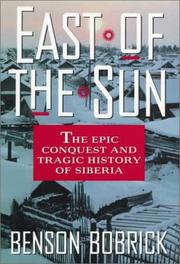 East of the Sun: The Epic Conquest and Tragic History of Siberia Shares Russia, history, nonfiction