The Magical State: Nature, Money, and Modernity in Venezuela
Sign in to keep track of books you’ve read and want to read.
In 1935, after the death of dictator General Juan Vicente Gomez, Venezuela consolidated its position as the world's major oil exporter and began to establish what today is South America's longest-lasting democratic regime. Endowed with the power of state oil wealth, successive presidents appeared as transcendent figures who could magically transform Venezuela into a modern nation. During the 1974-78 oil boom, dazzling development projects promised finally to effect this transformation. Yet now the state must struggle to appease its foreign creditors, counter a declining economy, and contain a discontented citizenry. In critical dialogue with contemporary social theory, Fernando Coronil examines key transformations in Venezuela's polity, culture, and economy, recasting theories of development and highlighting the relevance of these processes for other postcolonial nations. The result is a timely and compelling historical ethnography of political power at the cutting edge of interdisciplinary reflections on modernity and the state.
Liked The Magical State: Nature, Money, and Modernity in Venezuela? Here’s where I’d start.
These suit anyone who liked The Magical State: Nature, Money, and Modernity in Venezuela. Sign in and mark a few books for picks shaped around your own taste.
-
We Created Chavez: A People's History of the Venezuelan Revolution Shares Latin America, Venezuela, history
-
 The FARC: The Longest Insurgency Shares Latin America, history
 -
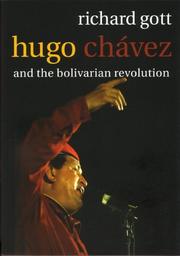 Hugo Chavez: The Bolivarian Revolution in Venezuela Shares Latin America, Venezuela, history
 -
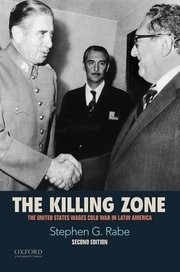 The Killing Zone: The United States Wages Cold War in Latin America Shares Latin America, history