Nietzsche
Sign in to keep track of books you’ve read and want to read.
Nietzsche claimed to be a philosopher of the future, but he was appropriated as a philosopher of Nazism. His work inspired a long study by Martin Heidegger and essays by a host of lesser disciples attached to the Third Reich. In 1935, however, Karl Jaspers set out to "marshall against the National Socialists the world of thought of the man they had proclaimed as their own philosopher." The year after publishing Nietzsche, Jaspers was discharged from his professorship at Heidelberg University by order of the Nazi leadership. Jaspers does not fall into the same trap as idealogues do, citing bits and pieces from Nietzsche's work to reinforce already held opinions. Instead, he openly shows the wide range of Nietzsche's views, including his endorsement of wars and warriors, his prophecies of world struggle and "new masters," and the cruel arrogance of the supermen. Yet Jaspers finds Nietzsche's philosophy to be extraordinary not only because he foresaw all the monstrosities of the twentieth century, but also because he saw through them. —
Liked Nietzsche? Here’s where I’d start.
These suit anyone who liked Nietzsche. Sign in and mark a few books for picks shaped around your own taste.
-
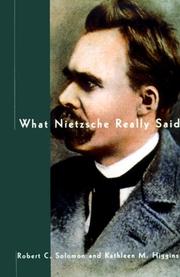 What Nietzsche Really Said Shares philosophy, nietzsche, existentialism
 -
 Daybreak: Thoughts on the Prejudices of Morality Shares philosophy, nietzsche, german
 -
 The Cambridge Companion to Nietzsche Shares philosophy, nietzsche
 -
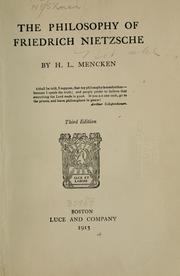 Free onlineFree
The Philosophy of Friedrich Nietzsche Shares philosophy, nietzsche
Free onlineFree
The Philosophy of Friedrich Nietzsche Shares philosophy, nietzsche