Frail Vessels: Woman's Role in Women's Novels from Fanny Burney to George Eliot
Sign in to keep track of books you’ve read and want to read.
The years between the publication of Mary Wollstonecraft's Vindication of the Rights of Woman (1792) and of John Stuart Mill's essay On the Subjection of Women (1869) - a crucial phase in the emancipation movement - also saw the emergence of England's greatest women writers, whose response to the flux of new ideas as revealed in many outstanding works of fiction Dr Mews here examines. The central chapters of the book take the form of a perceptive and humane analysis of the way in which the greater women novelists conceived the role of women, on the one hand as young girls, wives and mothers, on the other as individuals standing alone in spinsterhood, as teachers or artists. The writers examined in detail are Fanny Burney, Maria Edgeworth, Jane Austen, the Bronte sisters, Elizabeth Gaskell, and George Eliot.Such a comprehensive study has not been attempted before. It throws light not only on the novel and the novelist in society but also on the transmutation of deeply felt experience into creative work.
Liked Frail Vessels: Woman's Role in Women's Novels from Fanny Burney to George Eliot? Here’s where I’d start.
These suit anyone who liked Frail Vessels: Woman's Role in Women's Novels from Fanny Burney to George Eliot. Sign in and mark a few books for picks shaped around your own taste.
-
 Jane Austen among women Shares english women novelists, women and literature, British
-
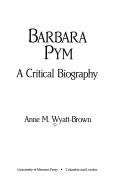 Barbara Pym Shares english women novelists, women and literature, British
-
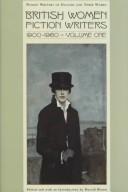 British women fiction writers, 1900-1960 Shares english women novelists, women and literature, British
-
 Women in Revolutionary Debate: Female Novelists from Burney to Austen Shares english women novelists, women and literature, British