Sputnik: The Launch of the Space Race
Sign in to keep track of books you’ve read and want to read.
On October 4, 1957 as Leave It to Beaverpremiered on American television, the Soviet Union launched the first man-made object into space, an 84-kilogram satellite carrying only a radio transmitter. While Sputnik immediately shocked the world, its long-term impact was even greater, for it profoundly changed the shape of the twentieth Century.
Read more
Washington journalist Paul Dickson chronicles the dramatic events and developments leading up to and emanating from the Sputnik's launch a story that can only now be fully told with the recent release of previously classified documents. Sputnikoffers a fascinating profile of the early American and Soviet space programs and a strikingly revised picture of the politics and personalities behind the facade of American's fledgling efforts to get into space.
Although Sputnik was unmanned, its story is intensely human. Sputnik owed its success to many people, from the earlier visionary Konstantin Tsiolkovsky, whose rocket theories were ahead of their time, to the Soviet spokesmen strategically positioned around the world on the day the satellite was launched, who created one of the greatest public-relations events of all time. It's chief designer, however the brillant Sergei Korolev remained a Soviet state secret until after his death.
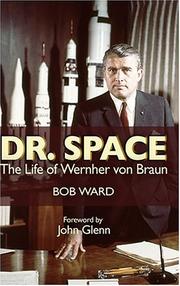
Equally hidden from view was the political intrigue dominating America's early space program, as the military services jockeyed for control and identity in a peacetime world. For years, former Nazi Wernher von Braun, who ran the U.S. Army's missile program, lobbied for his rocket team to be handed responsibility for the first Earth-orbiting satellite. He was outraged that Sputnik beat him and America into space. President Eisenhower, though, was secretly pleased that the Russians had launched first, because by orbiting over the United States, Sputnik established the principle of "freedom of space" that could justify the spy satellites he thought essential to monitor Soviet missile buildup. As Dickson reveals, Eisenhower was, in fact, much more a master of the Sputnik crisis than he appeared to be at the time and in subsequent accounts.
Liked Sputnik: The Launch of the Space Race? Here’s where I’d start.
These suit anyone who liked Sputnik: The Launch of the Space Race. Sign in and mark a few books for picks shaped around your own taste.
-
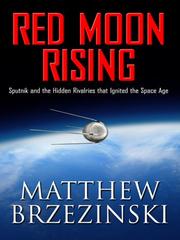 Red Moon Rising: Sputnik and the Hidden Rivalries that Ignited the Space Age Shares space, history, nonfiction
 -
 Korolev: How One Man Masterminded the Soviet Drive to Beat America to the Moon Shares space, history, science
 -
 Space Race: The Epic Battle Between America and the Soviet Union for Dominion of Space Shares space, history, nonfiction
 -
 Dragonfly: NASA and the Crisis Aboard Mir Shares space, history, science