Why Life Speeds Up as You Get Older: How Memory Shapes Our Past
Sign in to keep track of books you’ve read and want to read.
Is it true, as the novelist Cees Nooteboom once wrote, that memory is like a dog that lies down where it pleases? Where do the long, lazy summers of our childhood go? Why, as we grow older, does time seem to condense, speed up and elude us, while in old age, significant events from our distant past can seem as vivid and real as what happened yesterday? Douwe Draaisma, author of the internationally acclaimed Metaphors of Memory (Cambridge, 2001), explores the nature of autobiographical memory. Applying a unique blend of scholarship, poetic sensibility, and keen observation, he tackles such extraordinary phenomena as deja-vu, near-death experiences, the memory feats of idiot savants, and the effects of extreme trauma on memory recall. Raising almost as many questions as it answers, this fascinating book will not fail to affect you at the same time as it educates and entertains. Douwe Draaisma is Professor of the History of Psychology in the Department of Theory and History of Psychology at the University of Groningen, The Netherlands. He has published books on time and memory and his articles have appeared in professional journals as diverse as Annals of Science, Psychological Medicine, and Nature. The original Dutch version of Why Life Speeds Up As You Get Older has won several scientific and literary awards.
Liked Why Life Speeds Up as You Get Older: How Memory Shapes Our Past? Here’s where I’d start.
These suit anyone who liked Why Life Speeds Up as You Get Older: How Memory Shapes Our Past. Sign in and mark a few books for picks shaped around your own taste.
-
Retrain Your Anxious Brain: Practical and Effective Tools to Conquer Anxiety Shares psychology, nonfiction, neuroscience
-
 The Memory Illusion: Remembering, Forgetting, and the Science of False Memory Shares psychology, nonfiction, neuroscience
 -
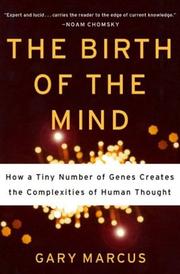 The Birth of the Mind: How a Tiny Number of Genes Creates The Complexities of Human Thought Shares psychology, neuroscience, nonfiction
 -
 The Optimism Bias: A Tour of the Irrationally Positive Brain Shares psychology, nonfiction, neuroscience