Archeology of Violence
Sign in to keep track of books you’ve read and want to read.
Pierre Clastres broke up with his mentor Claude Levi-Strauss to collaborate with Gilles Deleuze and Felix Gattari on their "Anti-Oedipus." He is the rare breed of political anthropologist—a Nietzschean—and his work presents us with a generalogy of power in a native state. For him, tribal societies are not Rousseauist in essence; to the contrary, they practice systematic violence in order to prevent the rise in their midst of this "cold monster" the state. Only by waging war with other tribes can they maintain the dispersion and autonomy of each group. In the same way, tribal chiefs are not all-powerful; to the contrary, they are rendered weak in order to remain dependent on the community. In a series of groundbreaking essays, Clastres turns around the analysis of power among South American Indians and rehabilitates violence as an affirmative act meant to protect the integrity of their societies. These "savages" are shrewd political minds who resist in advance any attempt at "globalization."
Liked Archeology of Violence? Here’s where I’d start.
These suit anyone who liked Archeology of Violence. Sign in and mark a few books for picks shaped around your own taste.
-
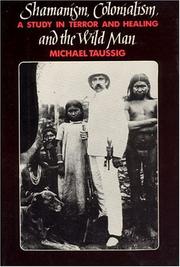 Shamanism, Colonialism, and the Wild Man: A Study in Terror and Healing Shares anthropology, nonfiction, ethnography
 -
 The Interpretation of Cultures Shares anthropology, nonfiction, philosophy
 -
 The Gift: The Form and Reason for Exchange in Archaic Societies Shares anthropology, nonfiction, philosophy
 -
 Primitive Culture: Researches Into The Development Of Mythology, Philosophy, Religion, Art, And Custom Shares anthropology, nonfiction, philosophy