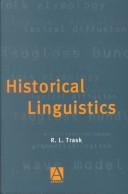
Historical Linguistics: An Introduction
Sign in to keep track of books you’ve read and want to read.
This accessible, hands-on text not only introduces students to the important topics in historical linguistics but also shows them how to apply the methods described and how to think about the issues; abundant examples and exercises allow students to focus on how to do historical linguistics. Distinctive to this text is its integration of the standard topics with others now considered important to the field, including syntactic change, grammaticalization, sociolinguistic contributions to linguistic change, distant genetic relationships, areal linguistics, and linguistic prehistory. Examples are taken from a broad range of languages; those from the more familiar English, French, German, and Spanish make the topics more accessible, while those from non-Indo-European languages show the depth and range of the concepts they illustrate. This second edition features expanded explanations and examples as well as updates in light of recent work in linguistics, including a defense of the family tree model, a response to recent claims on lexical diffusion/frequency, and a section on why languages diversify and spread.
Liked Historical Linguistics: An Introduction? Here’s where I’d start.
These suit anyone who liked Historical Linguistics: An Introduction. Sign in and mark a few books for picks shaped around your own taste.
-
 An Introduction to Historical Linguistics Shares linguistics, language, languages
 -
 Syntax: A Generative Introduction Shares linguistics, language, nonfiction
 -
 The World's Major Languages Shares linguistics, language, nonfiction
 -
 Describing Morphosyntax: A Guide for Field Linguists Shares linguistics, language, nonfiction