Strength Of Materials

Strength of Materials is a textbook for engineering students that explains how solid bodies behave under load. It opens with the basic ideas of stress and strain, then moves through the tools engineers use to analyze structures: shear force and bending moment diagrams, bending and shear stresses in beams, deflection, torsion of shafts, and the behavior of thin cylinders and columns.

Read more

Worked examples accompany the theory throughout, with problems at the end of chapters for practice. Written for undergraduate courses in civil, mechanical and related disciplines, it is a familiar reference in Indian engineering courses and a standard text for exam preparation.

Audience
adult
Length
epic · 1000 pages

Click a tag to see books like this one that share it. Point at it (on a phone, tap it) for less of it instead.

Read it? Sign in to help tag it.

Liked Strength Of Materials? Here’s where I’d start.

These suit anyone who liked Strength Of Materials. Sign in and mark a few books for picks shaped around your own taste.
  1. Mechanics of Materials Shares engineering, mechanical
  2. Civil Engineering Reference Manual for the PE Exam Shares engineering, civil engineering
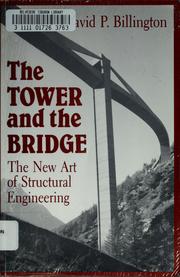
  3. The Tower and the Bridge: The New Art of Structural Engineering Shares engineering, civil engineering
  4. Surveying And Levelling Shares civil, engineering, my

“If you want more of the same (science), start with these.”

  1. Spectrums: Our Mind-boggling Universe from Infinitesimal to Infinity
  2. Schrodinger's Rabbits: The Many Worlds of Quantum
  3. Liars, Lovers, and Heroes: What the New Brain Science Reveals About How We Become Who We Are
  4. Algebra 2: An Incremental Development

“If it was the engineering that hooked you, try one of these.”

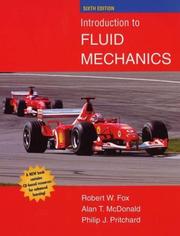
  1. Introduction to Fluid Mechanics [With CDROM]
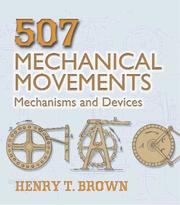
  2. 507 Mechanical Movements: Mechanisms and Devices
  3. The Civilized Engineer
  4. Engineering and the Mind's Eye

“These start from a similar idea, even if they go somewhere else with it.”

  1. Mechanics of engineering materials
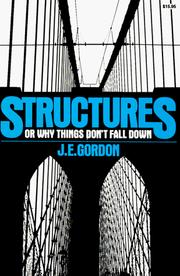
  2. Structures: Or Why Things Don't Fall Down
  3. Engineering Economy
  4. Advanced engineering mathematics