Rizoma
Sign in to keep track of books you’ve read and want to read.
Rizoma is a short work by Gilles Deleuze and Félix Guattari, first published in 1976 and later used as the opening of their larger book A Thousand Plateaus. In it, the authors set the image of the rhizome, a root system that spreads sideways with no single trunk, against the tree-like model of thought that arranges knowledge into hierarchies with one origin. They lay out principles such as connection, heterogeneity, multiplicity and the ability to break off and grow again. They argue for a way of thinking that maps relations rather than tracing fixed roots. The essay is dense but brief, and it has become a touchstone of contemporary philosophy and theory.
Liked Rizoma? Here’s where I’d start.
These suit anyone who liked Rizoma. Sign in and mark a few books for picks shaped around your own taste.
-
 The Imaginary Signifier: Psychoanalysis and the Cinema Shares theory, nonfiction
-
 Why Hasn't Everything Already Disappeared? Shares philosophy, theory, essay
-
 Exposing the Magic of Design: A Practitioner's Guide to the Methods and Theory of Synthesis Shares nonfiction
-
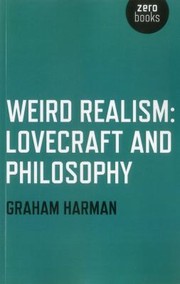 Weird Realism: Lovecraft and Philosophy Shares philosophy, theory, filosofia