Planet Narnia: The Seven Heavens in the Imagination of C.S. Lewis
Sign in to keep track of books you’ve read and want to read.
For over half a century, scholars have laboured to show that C. S. Lewis's famed but apparently disorganised Chronicles of Narnia have an underlying symbolic coherence, pointing to such possible unifying themes as the seven sacraments, the seven deadly sins, and the seven books of Spenser's Faerie Queene. None of these explanations has won general acceptance and the structure of Narnia's symbolism has remained a mystery.
Michael Ward has finally solved the enigma. In Planet Narnia he demonstrates that medieval cosmology, a subject which fascinated Lewis throughout his life, provides the imaginative key to the seven novels. Drawing on the whole range of Lewis's writings (including previously unpublished drafts of the Chronicles), Ward reveals how the Narnia stories were designed to express the characteristics of the seven medieval planets - - Jupiter, Mars, Sol, Luna, Mercury, Venus, and Saturn - - planets which Lewis described as "spiritual symbols of permanent value" and "especially worthwhile in our own generation." Using these seven symbols, Lewis secretly constructed the Chronicles so that in each book the plot-line, the ornamental details, and, most important, the portrayal of the Christ-figure of Aslan, all serve to communicate the governing planetary personality. The cosmological theme of each Chronicle is what Lewis called 'the kappa element in romance', the atmospheric essence of a story, everywhere present but nowhere explicit. The reader inhabits this atmosphere and thus imaginatively gains connaitre knowledge of the spiritual character which the tale was created to embody.
Read more
Planet Narnia is a ground-breaking study that will provoke a major revaluation not only of the Chronicles, but of Lewis's whole literary and theological outlook. Ward uncovers a much subtler writer and thinker than has previously been recognized, whose central interests were hiddenness, immanence, and knowledge by acquaintance."
Liked Planet Narnia: The Seven Heavens in the Imagination of C.S. Lewis? Here’s where I’d start.
These suit anyone who liked Planet Narnia: The Seven Heavens in the Imagination of C.S. Lewis. Sign in and mark a few books for picks shaped around your own taste.
-
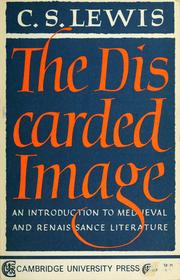 The Discarded Image: An Introduction to Medieval and Renaissance Literature Shares nonfiction, literary criticism, inklings
 -
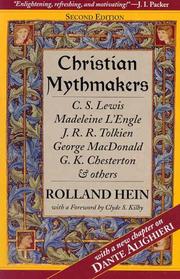 Christian Mythmakers: C.S. Lewis, Madeleine L'Engle, J.R.R. Tolkien, George MacDonald, G.K. Chesterton, Charles Williams, Dante Alighieri, John Bunyan, Walter Wangerin, Robert Siegel, and Hannah Hurnard Shares nonfiction, literary criticism, inklings
 -
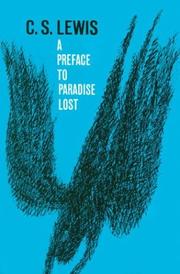 A Preface to Paradise Lost Shares nonfiction, literary criticism, inklings
 -
 An Experiment in Criticism Shares nonfiction, literary criticism, literature