
Original Enlightenment and the Transformation of Medieval Japanese Buddhism
Sign in to keep track of books you’ve read and want to read.
Original enlightenment thought (hongaku shiso) dominated Buddhist intellectual circles throughout Japan's medieval period. Enlightenment, this discourse claims, is neither a goal to be achieved nor a potential to be realized but the true status of all things. Every animate and inanimate object manifests the primordially enlightened Buddha just as it is. Seen in its true aspect, every activity of daily life—eating, sleeping, even one's deluded thinking—is the Buddha's conduct. Emerging from within the powerful Tendai School, ideas of original enlightenment were appropriated by a number of Buddhist traditions and influenced nascent theories about the kami (local deities) as well as medieval aesthetics and the literary and performing arts.
Read more
Scholars and commentators have long recognized the historical importance of original enlightenment thought but differ heatedly over how it is to be understood. Some tout it as the pinnacle of the Buddhist philosophy of absolute non-dualism. Others claim to find in it the paradigmatic expression of a timeless Japanese spirituality. According other readings, it represents a dangerous anti-nomianism that undermined observance of moral precepts, precipitated a decline in Buddhist scholarship, and denied the need for religious discipline. Still others denounce it as an authoritarian ideology that, by sacralizing the given order, has in effect legitimized hierarchy and discriminative social practices. Often the acceptance or rejection of original enlightenment thought is seen as the fault line along which traditional Buddhist institutions are to be differentiated from the new Buddhist movements (Zen, Pure Land, and Nichiren) that arose during Japan's medieval period.
Jacqueline Stone's groundbreaking study moves beyond the treatment of the original enlightenment doctrine as abstract philosophy to explore its historical dimension. Drawing on a wealth of medieval primary sources and modern Japanese scholarship, it places this discourse in its ritual, institutional, and social contexts, illuminating its importance to the maintenance of traditions of lineage and the secret transmission of knowledge that characterized several medieval Japanese elite culture. It sheds new light on interpretive strategies employed in pre-modern Japanese Buddhist texts, an area that hitherto has received a little attention. Through these and other lines of investigation, Stone problematizes entrenched notions of "corruption" in the medieval Buddhist establishment. Using the examples of Tendai and Nichiren Buddhism and their interactions throughout the medieval period, she calls into question both overly facile distinctions between "old" and "new" Buddhism and the long-standing scholarly assumptions that have perpetuated them. This study marks a significant contribution to ongoing debates over definitions of Buddhism in the Kamakura era (1185-1333), long regarded as a formative period in Japanese religion and culture. Stone argues that "original enlightenment thought" represents a substantial rethinking of Buddhist enlightenment that cuts across the distinction between "old" and "new" institutions and was particularly characteristic of the medieval period.
Liked Original Enlightenment and the Transformation of Medieval Japanese Buddhism? Here’s where I’d start.
These suit anyone who liked Original Enlightenment and the Transformation of Medieval Japanese Buddhism. Sign in and mark a few books for picks shaped around your own taste.
-
 Becoming Kuan Yin: The Evolution of Compassion Shares Buddhism, philosophy, religion
-
 All is Change: The Two-Thousand-Year Journey of Buddhism to the West Shares Buddhism, philosophy, religion
-
 The Faith to Doubt: Glimpses of Buddhist Uncertainty Shares Buddhism, religion, philosophy
-
 The Foundations of Buddhism Shares Buddhism, religion, philosophy
“If you want more of the same (philosophy about buddhism), start with these.”



“If it was the Buddhism that hooked you, try one of these.”


“These start from a similar idea, even if they go somewhere else with it.”
-
 The Beginnings of Western Science: The European Scientific Tradition in Philosophical, Religious, and Institutional Context, 600 B.C. to A.D. 1450
-
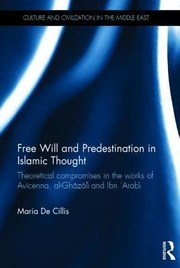 Free Will and Predestination in Islamic Thought Culture and Civilization in the Middle East
- Medieval Islamic Republic of Letters
-
 Medieval Civilization 400-1500