The Day of St. Anthony's Fire
Sign in to keep track of books you’ve read and want to read.
This is the strange, true, almost incredible story of a small French village where in '51 hundreds of townspeople went mad on a single night. Many of the most highly regarded citizens leaped from windows or jumped into the Rhone, screaming that their heads were made of copper, their bodies wrapped in snakes, their limbs swollen to gigantic size or shrunken to tiny appendages. Others ran through the streets, claiming to be chased by "bandits with donkey ears", by tigers, lions & other terrifying apparitions. Animals went berserk. Dogs ripped bark from trees until their teeth fell out. Cats dragged themselves along the floor in grotesque contortions. Ducks strutted like penguins. Villagers & animals died right & left.
Read more
Bit by bit, the story behind the tragedy in Pont-St-Esprit—a tiny Provencial village of twisted streets that looks much today as it did in the Middle Ages—unfolded to doctors & toxcologists. That story, one of the most bizarre in modern medical history, is movingly recounted in The Day of St. Anthony's Fire.
Throughout the Middle Ages & during other times in history, similar hallucinatory outbreaks occurred. They were called St. Anthony's Fire because it was believed that only prayers to the saint could hold the disease in check.
Even modern medicine could find no way to check the disease. Drugs failed to bring even temporary relief. Hundreds in the village suffered for weeks, with total agonizing insomnia, never knowing when they might once more suddenly go berserk.
The cause of St. Anthony's Fire was known since early history to be ergot, a mold found on rye grain that at rare times inexplicably became posionous enough to create monstrous hallucinations & death. In '51 little significance was attached to the fact that the base of ergot was lysergic acid, also the base for LSD, a drug just coming to the attention of scientists at the time—a drug so powerful that one eye-dropperful could cause as many as 5000 people to hallucinate for hours. At this point, the story becomes a vividly absorbing medical detective story demonstrating the possibility that a strange, spontaneous form of LSD might have caused the human tragedy that came to the hapless villagers of Pont-St-Esprit.
Liked The Day of St. Anthony's Fire? Here’s where I’d start.
These suit anyone who liked The Day of St. Anthony's Fire. Sign in and mark a few books for picks shaped around your own taste.
-
 The Pursuit of Oblivion: A Global History of Narcotics Shares nonfiction, history, drugs
 -
 The Immortalists: Charles Lindbergh, Dr. Alexis Carrel, and Their Daring Quest to Live Forever Shares nonfiction, history
 -
 In the Arms of Morpheus: The Tragic History of Laudanum, Morphine, and Patent Medicines Shares nonfiction, history, medical
 -
 A Promise of Hope Shares nonfiction
“People who read The Day of St. Anthony's Fire tend to reach for these next.”


“If you want more of the same (history about medical), start with these.”
“If it was the medical that hooked you, try one of these.”
- The Fever of 1721: The Epidemic That Revolutionized Medicine and American Politics
-
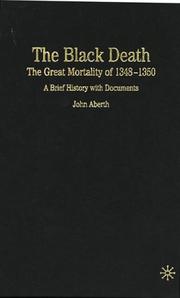 The Black Death: The Great Mortality of 1348-1350: A Brief History with Documents
-
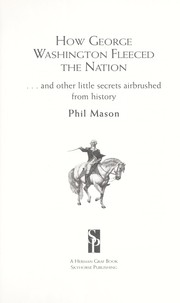 How George Washington Fleeced the Nation: And Other Little Secrets Airbrushed From History
-
 Witches, Rakes, And Rogues: True Stories of Scam, Scandal, Murder, And Mayhem in Boston, 1630-1775