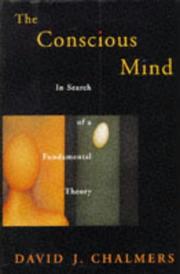
Explaining Consciousness: The Hard Problem
Sign in to keep track of books you’ve read and want to read.
At the 1994 landmark conference "Toward a Scientific Basis for Consciousness," philosopher David Chalmers distinguished between the "easy" problems and the "hard" problem of consciousness research. According to Chalmers, the easy problems are to explain cognitive functions such as discrimination, integration, and the control of behavior; the hard problem is to explain why these functions should be associated with phenomenal experience. Why doesnt all this cognitive processing go on "in the dark," without any consciousness at all? In this book, philosophers, physicists, psychologists, neurophysiologists, computer scientists, and others address this central topic in the growing discipline of consciousness studies. Some take issue with Chalmers' distinction, arguing that the hard problem is a non-problem, or that the explanatory gap is too wide to be bridged. Others offer alternative suggestions as to how the problem might be solved, whether through cognitive science, fundamental physics, empirical phenomenology, or with theories that take consciousness as irreducible. Contributors: Bernard J. Baars, Douglas J. Bilodeau, David Chalmers, Patricia S. Churchland, Thomas Clark, C. J. S. Clarke, Francis Crick, Daniel C. Dennett, Stuart Hameroff, Valerie Hardcastle, David Hodgson, Piet Hut, Christof Koch, Benjamin Libet, E. J. Lowe, Bruce MacLennan, Colin McGinn, Eugene Mills, Kieron OHara, Roger Penrose, Mark C. Price, William S. Robinson, Gregg Rosenberg, Tom Scott, William Seager, Jonathan Shear, Roger N. Shepard, Henry Stapp, Francisco J. Varela, Max Velmans, Richard Warner
Liked Explaining Consciousness: The Hard Problem? Here’s where I’d start.
These suit anyone who liked Explaining Consciousness: The Hard Problem. Sign in and mark a few books for picks shaped around your own taste.
-
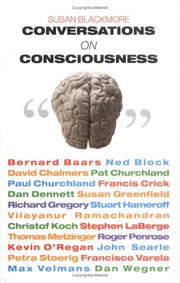 Conversations on Consciousness: What the Best Minds Think about the Brain, Free Will, and What It Means to Be Human Shares philosophy, neuroscience, science
-
 The New Science of the Mind: From Extended Mind to Embodied Phenomenology Shares philosophy, philosophy of mind, cognitive science
-
 Neuroscience and Philosophy: Brain, Mind, and Language Shares philosophy, neuroscience, science
-
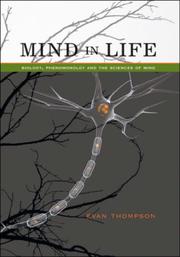 Mind in Life: Biology, Phenomenology, and the Sciences of Mind Shares philosophy, cognitive science, neuroscience