Communication Power
Sign in to keep track of books you’ve read and want to read.
We live in the midst of a revolution in communication technologies that affects the way in which people feel, think, and behave. The media have become the space where power strategies are played out. In the current technological context mass communication goes beyond traditional media and includes the Internet and mobile communication.
Read more
In this wide-ranging and powerful book, Manuel Castells analyses the transformation of the global media industry by this revolution in communication technologies. He argues that a new communication system, mass self-communication, has emerged, and power relationships have been profoundly modified by the emergence of this new communication environment. Created in the commons of the Internet this communication can be locally based, but globally connected. It is built through messaging, social networks sites, and blogging, and is now being used by the millions around the world who have access to the Internet.
Drawing on a wide range of social and psychological theories, Castells presents original research on political processes and social movements. He applies this analysis to numerous recent events—the misinformation of the American public on the Iraq War, the global environmental movement to prevent climate change, the control of information in China and Russia, Barak Obama's internet-based presidential campaigns, and (in this new edition) responses to recent political and economic crises such as the Arab Spring and the Occupy movement. On the basis of these case studies he proposes a new theory of power in the information age based on the management of communication networks
Justly celebrated for his analysis of the network society, Castells here builds on that work, offering a well grounded and immensely challenging picture of communication and power in the 21st century. This is a book for anyone who wants to understand the dynamics and character of the modern world.
Liked Communication Power? Here’s where I’d start.
These suit anyone who liked Communication Power. Sign in and mark a few books for picks shaped around your own taste.
-
 The Cult of the Amateur: How Today's Internet Is Killing Our Culture Shares nonfiction, sociology, technology
 -
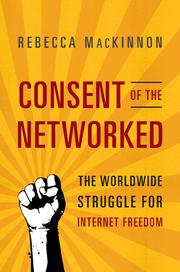 Consent of the Networked: The Worldwide Struggle For Internet Freedom Shares nonfiction, technology, internet
 -
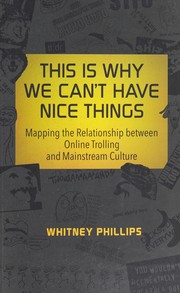 This Is Why We Can't Have Nice Things: Mapping the Relationship Between Online Trolling and Mainstream Culture Shares nonfiction, sociology, technology
 -
 Information Anxiety 2 Shares nonfiction, technology, media