Cover of Creating Capabilities: The Human Development Approach

Creating Capabilities: The Human Development Approach

If a country's Gross Domestic Product increases each year, but so does the percentage of its people deprived of basic education, health care, and other opportunities, is that country really making progress? If we rely on conventional economic indicators, can we ever grasp how the world's billions of individuals are really managing? In this powerful critique, Martha Nussbaum argues that our dominant theories of development have given us policies that ignore our most basic human needs for dignity and self-respect. For the past twenty-five years, Nussbaum has been working on an alternate model to assess human development: the Capabilities Approach. She and her colleagues begin with the simplest of questions: What is each person actually able to do and to be? What real opportunities are available to them? The Capabilities Approach to human progress has until now been expounded only in specialized works. Creating Capabilities, however, affords anyone interested in issues of human development a wonderfully lucid account of the structure and practical implications of an alternate model.

Audience
adult
Length
medium · 237 pages

Click a tag to see books like this one that share it. Point at it (on a phone, tap it) for less of it instead.

Read it? Sign in to help tag it.

Liked Creating Capabilities: The Human Development Approach? Here’s where I’d start.

These suit anyone who liked Creating Capabilities: The Human Development Approach. Sign in and mark a few books for picks shaped around your own taste.
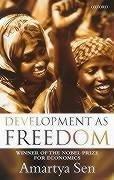
  1. Development as Freedom Shares development, economics, philosophy
  2. Free onlineFree
    The Theory of Moral Sentiments Shares philosophy, economics, nonfiction
  3. Human Rights: A Very Short Introduction Shares nonfiction, philosophy, politics
  4. On Inequality Shares philosophy, economics, nonfiction

“People who read Creating Capabilities: The Human Development Approach tend to reach for these next.”

  1. The Good Society: The Humane Agenda
  2. Freedom: Short Stories Celebrating the Universal Declaration of Human Rights
  3. Rights Gone Wrong: How Law Corrupts the Struggle for Equality
  4. The Possibility of Altruism

“If you want more of the same (philosophy about social issues), start with these.”

  1. The Libertarian Idea
  2. The Ethics of Liberty
  3. Economic and Philosophic Manuscripts of 1844
  4. Economic & Philosophic Manuscripts of 1844/The Communist Manifesto

“If it was the economics that hooked you, try one of these.”

  1. Selected Works
  2. Rousseau's Political Writings: Discourse on Inequality, Discourse on Political Economy, on Social Contract
  3. Rationality and Freedom
  4. Capitalism: The Unknown Ideal

“These start from a similar idea, even if they go somewhere else with it.”

  1. Eliminating Human Poverty: Macroeconomic and Social Policies for Equitable Growth
  2. Frontiers of Development Economics: The Future in Perspective
  3. Institutions, human development and economic growth in transition economies
  4. One Earth, One Future: Our Changing Global Environment