Dostoevsky and Parricide
Sign in to keep track of books you’ve read and want to read.
In this short 1928 essay, Sigmund Freud turns his psychoanalytic eye on Fyodor Dostoevsky, using the novelist's life and his best-known novel to explore the roots of creative work and guilt. He looks at the writer's childhood, his fraught relationship with his father, and the epileptic seizures that troubled him, asking how these might connect to the dark urge toward parricide that runs through a family torn apart by a father's violent death.
Read more
Freud argues that the novel's central crime is not merely a plot device but a reflection of hidden feelings shared by many people, and that an artist's imaginative works can reveal the inner conflicts that shaped them. The essay is a clear example of how Freud read literature as evidence for his theories of the unconscious, and it remains a touchstone for anyone interested in psychoanalytic criticism.
Liked Dostoevsky and Parricide? Here’s where I’d start.
These suit anyone who liked Dostoevsky and Parricide. Sign in and mark a few books for picks shaped around your own taste.
-
 The Maturational Processes and the Facilitating Environment Shares psychology, psychoanalysis, nonfiction
-
 Winnicott Shares psychology, psychoanalysis, nonfiction
-
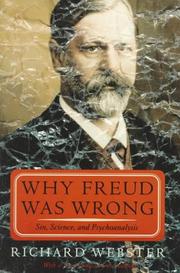 Why Freud Was Wrong: Sin, Science and Psychoanalysis Shares psychology, psychoanalysis, nonfiction
-
 Strictly Bipolar Shares psychology, psychoanalysis, nonfiction