Game Theory 101: The Basics
Sign in to keep track of books you’ve read and want to read.
Spaniel turns his clear, logic-first approach toward one of humanity's oldest problems: why nations go to war. Using game-theoretic models of crisis bargaining, he asks why two rational, unbiased leaders might still end up fighting, why states often settle for compromise rather than pursuing total defeat, and why civil conflicts tend to end differently from wars between countries. He also examines how nuclear arsenals can keep the peace, why negotiation breaks down into force, and what separates preventive from preemptive action. Illustrated with many diagrams, the book argues that war is best understood as a calculated choice made under uncertainty. For anyone living in a democracy, it offers a useful way to think about how states decide to fight and why they so often stop short of it.
Liked Game Theory 101: The Basics? Here’s where I’d start.
These suit anyone who liked Game Theory 101: The Basics. Sign in and mark a few books for picks shaped around your own taste.
-
 Game Theory: A Nontechnical Introduction Shares game theory, mathematics, math
-
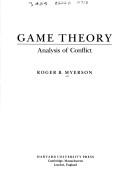 Game Theory. Analysis of conflict Shares economics, game theory, math
-
 Rock, Paper, Scissors: Game Theory in Everyday Life Shares nonfiction, game theory, math
-
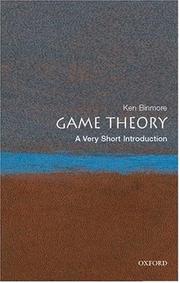 Game Theory: A Very Short Introduction Shares nonfiction, game theory, economics