The Cerebellum: Brain for an Implicit Self
Sign in to keep track of books you’ve read and want to read.
Leading neuroscientist Dr. Masao Ito advances a detailed and fascinating view of what the cerebellum contributes to brain function. The cerebellum has been seen as primarily involved in coordination of body movement control, facilitating the learning of motor skills such as those involved in walking, riding a bicycle, or playing a piano. The cerebellum is now viewed as an assembly of numerous neuronal machine modules, each of which provides an implicit learning capability to various types of motor control. The cerebellum enables us to unconsciously learn motor skills through practice by forming internal models simulating control system properties of the body parts. Based on these remarkable advances in our understanding of motor control mechanisms of the cerebellum, Ito presents a still larger view of the cerebellum as serving a higher level of brain functions beyond movements, including the implicit part of the thought and cognitive processes that manipulate knowledge. Ito extends his investigation of the cerebellum to discuss neural processes that may be involved implicitly in such complex mental actions as having an intuition, imagination, hallucination, or delusion.
Liked The Cerebellum: Brain for an Implicit Self? Here’s where I’d start.
These suit anyone who liked The Cerebellum: Brain for an Implicit Self. Sign in and mark a few books for picks shaped around your own taste.
-
 Your Brain is a Time Machine: The Neuroscience and Physics of Time Shares neuroscience, science, nonfiction
-
 30-Second Brain: The 50 Most Mind-blowing Ideas in Neuroscience, Each Explained in Half a Minute Shares neuroscience, science, nonfiction
-
 50 Human Brain Ideas You Really Need to Know Shares neuroscience, science, nonfiction
-
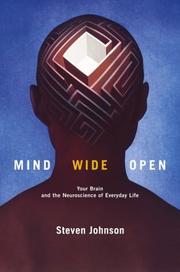 Mind Wide Open: Your Brain and the Neuroscience of Everyday Life Shares neuroscience, science, nonfiction