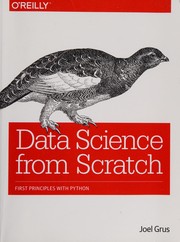
Machine Learning: A Probabilistic Perspective
Sign in to keep track of books you’ve read and want to read.
Today's Web-enabled deluge of electronic data calls for automated methods of data analysis. Machine learning provides these, developing methods that can automatically detect patterns in data and then use the uncovered patterns to predict future data. This textbook offers a comprehensive and self-contained introduction to the field of machine learning, a unified, probabilistic approach. The coverage combines breadth and depth, offering necessary background material on such topics as probability, optimization, and linear algebra as well as discussion of recent developments in the field, including conditional random fields, L1 regularization, and deep learning. The book is written in an informal, accessible style, complete with pseudo-code for the most important algorithms. All topics are copiously illustrated with color images and worked examples drawn from such application domains as biology, text processing, computer vision, and robotics. Rather than providing a cookbook of different heuristic methods, the book stresses a principled model-based approach, often using the language of graphical models to specify models in a concise and intuitive way. Almost all the models described have been implemented in a MATLAB software package—PMTK (probabilistic modeling toolkit)—that is freely available online. The book is suitable for upper-level undergraduates with an introductory-level college math background and beginning graduate students.
Liked Machine Learning: A Probabilistic Perspective? Here’s where I’d start.
These suit anyone who liked Machine Learning: A Probabilistic Perspective. Sign in and mark a few books for picks shaped around your own taste.
-
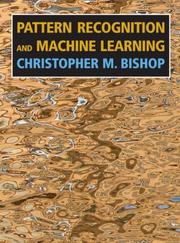 Pattern Recognition and Machine Learning Shares machine learning, data science, ml
 -
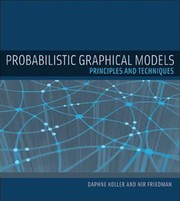 Probabilistic Graphical Models: Principles and Techniques Shares machine learning, data science, computer science
 -
 The Elements of Statistical Learning: Data Mining, Inference, and Prediction Shares machine learning, data science, ml
 -
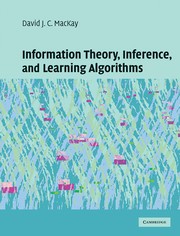 Information Theory, Inference and Learning Algorithms Shares machine learning, data science, computer science
“People who read Machine Learning: A Probabilistic Perspective tend to reach for these next.”


“If you want more of the same (science about technology), start with these.”
-
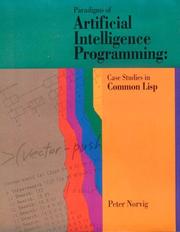 Paradigms of Artificial Intelligence Programming: Case Studies in Common LISP
-
 Speech and Language Processing: An Introduction to Natural Language Processing, Computational Linguistics and Speech Recognition
-
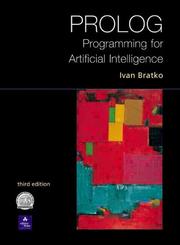 PROLOG: Programming for Artificial Intelligence
-
 Artificial Life: A Report from the Frontier Where Computers Meet Biology