DevOps for Developers
Sign in to keep track of books you’ve read and want to read.
DevOps for Developers delivers a practical, thorough introduction to approaches, processes and tools to foster collaboration between software development and operations. Efforts of Agile software development often end at the transition phase from development to operations. This book covers the delivery of software, this means "the last mile", with lean practices for shipping the software to production and making it available to the end users, together with the integration of operations with earlier project phases (elaboration, construction, transition).
Liked DevOps for Developers? Here’s where I’d start.
These suit anyone who liked DevOps for Developers. Sign in and mark a few books for picks shaped around your own taste.
-
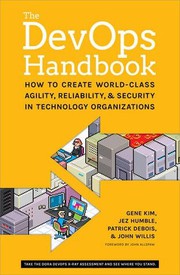 The DevOps Handbook: How to Create World-Class Agility, Reliability, and Security in Technology Organizations Shares devops, programming, work
-
 Terraform: Up and Running: Writing Infrastructure as Code Shares devops, work, nonfiction
-
 Effective Devops: Building a Culture of Collaboration, Affinity, and Tooling at Scale Shares devops, nonfiction
-
 Continuous Delivery: Reliable Software Releases Through Build, Test, and Deployment Automation Shares devops, programming, software