Women, Love, and Power: Literary and Psychoanalytic Perspectives
Sign in to keep track of books you’ve read and want to read.
Elaine Baruch is not only among the most quiet-voiced and fair-minded of feminist writers. She is also among the most far-ranging in her scholarship, equally at ease with the writers of the Renaissance and Freud, the medieval troubadours, and our contemporary polemicists. . . instructive, absorbing, and persuasive.
Read more
—Diana Trilling
A lively mind is at work here and a keen and witty writer too.
—Irving Howe
This is a fine collection of essays. . . making many imaginative conjectures and amusing connections.
—Times Literary Supplement
In these essays what emerges is a history of romantic love. . . Highly recommended.—Library Journal
Arguing that romantic love need not be a tool of women's oppression, feminist critic Baruch. . . contends that unacknowledged male fantasies about love motivate much literature by men. . . rewarding, provocative.—Publishers Weekly
Utilizing both Freudian and non-Freudian psychoanalysis as well as feminist criticism, Baruch examines literary works by women and men from medieval and Romantic periods as well as cultural observations on the twentieth century and how they have influenced attitudes toward love.
Liked Women, Love, and Power: Literary and Psychoanalytic Perspectives? Here’s where I’d start.
These suit anyone who liked Women, Love, and Power: Literary and Psychoanalytic Perspectives. Sign in and mark a few books for picks shaped around your own taste.
-
 Making Love, Playing Power Shares control, psychology, love
-
 Women physicians and the cultures of medicine Shares control, psychology, women
-
 Why do I think I am nothing without a man? Shares psychology, women
-
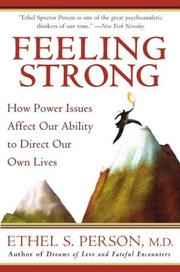 Feeling Strong: How Power Issues Affect Our Ability to Direct Our Own Lives Shares control, psychology