Peacekeepers and Conquerors: The Army Officer Corps on the American Frontier, 1821-1846
Sign in to keep track of books you’ve read and want to read.
In Jackson's Sword, Samuel Watson showed how the U.S. Army officer corps played a crucial role in stabilizing the frontiers of a rapidly expanding nation. In this sequel volume, he chronicles how the corps' responsibilities and leadership along the young nation's borders continued to grow. In the process, he shows, officers reflected an increasing commitment to professionalism, insulation from partisanship, and deference to civilian authority-all tempered in the forge of frustrating, politically complex operations and diplomacy along the nation's frontiers.
Read more
Watson now focuses on the quarter-century between the Army's reduction in force in 1821 and the Mexican War. He examines a broad swath of military activity beginning with campaigns against southeastern Indians, notably the dispossession of the Creeks remaining in Georgia and Alabama from 1825 to 1834; the expropriation of the Cherokee between 1836 and 1838; and the Second Seminole War. He also explores peacekeeping on the Canadian border, which exploded in rebellion against British rule at the end of 1837, prompting British officials to applaud the U.S. Army for calming tensions and demonstrating its government's support for the international state system. He then follows the gradual extension of U.S. sovereignty in the Southwest through military operations west of the Missouri River and along the Louisiana-Texas border from 1821 to 1838 and through dragoon expeditions onto the central and southern Plains between 1834 and 1845.
Throughout his account, Watson shows how military professionalism did not develop independent of civilian society, nor was it simply a matter of growing expertise in the art of conventional warfare. Indeed, the government trusted career army officers to serve as federal, international, and interethnic mediators, national law enforcers, and de facto intercultural and international peacekeepers. He also explores officers' attitudes toward Britain, Oregon, Texas, and Mexico to assess their values and priorities on the eve of the first conventional war the United States had fought in more than three decades.
Watson's detailed study delves deeply into sources that reveal what officers actually thought, wrote, and did in the frontier and border regions. By examining the range of operations over the course of this quarter-century, he shows that the processes of peacekeeping, coercive diplomacy, and conquest were intricately and inextricably woven together.
Liked Peacekeepers and Conquerors: The Army Officer Corps on the American Frontier, 1821-1846? Here’s where I’d start.
These suit anyone who liked Peacekeepers and Conquerors: The Army Officer Corps on the American Frontier, 1821-1846. Sign in and mark a few books for picks shaped around your own taste.
-
 Standing in the gap Shares military history, wars, united states army
-
 Frontiersmen in blue; the United States Army and the Indian, 1848-1865 Shares wars, united states army, Native American
-
 Custer and the Little Bighorn Shares wars, united states army, Native American
-
 Black '41 Shares officers, united states army, military history
“If you want more of the same (history about military history), start with these.”


“If it was the wars that hooked you, try one of these.”
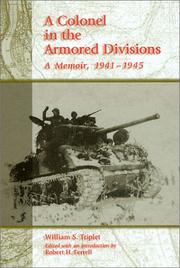

“These start from a similar idea, even if they go somewhere else with it.”
-
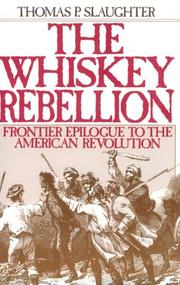 The Whiskey Rebellion: Frontier Epilogue to the American Revolution
-
 The Millennial Generation and National Defense
-
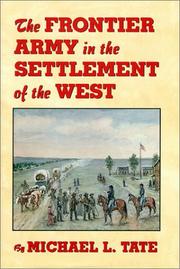 The frontier army in the settlement of the West
- American Guerrilla: The Forgotten Heroics of Russell W. Volckmann-the Man Who Escaped from Bataan, Raised a Filipino Army against the Japanese, and became the True "Father" of Army Special Forces