Collecting Shakespeare: The Story of Henry and Emily Folger
Sign in to keep track of books you’ve read and want to read.
In Collecting Shakespeare, Stephen H. Grant recounts the American success story of Henry and Emily Folger of Brooklyn, a couple who were devoted to each other, in love with Shakespeare, and bitten by the collecting bug.
Read more
Shortly after marrying in 1885, the Folgers started buying, cataloging, and storing all manner of items about Shakespeare and his era. Emily earned a master's degree in Shakespeare studies. The frugal couple worked passionately as a tight-knit team during the Gilded Age, financing their hobby with the fortune Henry earned as president of Standard Oil Company of New York, where he was a trusted associate of John D. Rockefeller Sr.
While a number of American universities offered to house the collection, the Folgers wanted to give it to the American people. Afraid the price of antiquarian books would soar if their names were revealed, they secretly acquired prime real estate on Capitol Hill near the Library of Congress. They commissioned the design and construction of an elegant building with a reading room, public exhibition hall, and the Elizabethan Theatre. The Folger Shakespeare Library was dedicated on the Bard's birthday, April 23, 1932.
The library houses 82 First Folios, 275,000 books, and 60,000 manuscripts. It welcomes more than 100,000 visitors a year and provides professors, scholars, graduate students, and researchers from around the world with access to the collections. It is also a vibrant center in Washington, D.C., for cultural programs, including theater, concerts, lectures, and poetry readings.
The library provided Grant with unprecedented access to the primary sources within the Folger vault. He draws on interviews with surviving Folger relatives and visits to 35 related archives in the United States and in Britain to create a portrait of the remarkable couple who ensured that Shakespeare would have a beautiful home in America.
Liked Collecting Shakespeare: The Story of Henry and Emily Folger? Here’s where I’d start.
These suit anyone who liked Collecting Shakespeare: The Story of Henry and Emily Folger. Sign in and mark a few books for picks shaped around your own taste.
-
 The Millionaire and the Bard: Henry Folger’s Obsessive Hunt for Shakespeare’s First Folio Shares nonfiction, shakespeare, books about
-
 The Book of William: How Shakespeare's First Folio Conquered the World Shares shakespeare, nonfiction, books about
-
 Shakespeare Basics for Grown-Ups: Everything You Need to Know About the Bard Shares shakespeare, nonfiction, history
-
 The Shakespeare Thefts: In Search of the First Folios Shares shakespeare, nonfiction, books about
“People who read Collecting Shakespeare: The Story of Henry and Emily Folger tend to reach for these next.”


“If you want more of the same (biography), start with these.”


“If it was the shakespeare that hooked you, try one of these.”
-
 The Boy Who Would Be Shakespeare: A Tale of Forgery and Folly
-
 Will in the World: How Shakespeare Became Shakespeare
-
 Becoming Shakespeare: The Unlikely Afterlife That Turned a Provincial Playwright into the Bard
-
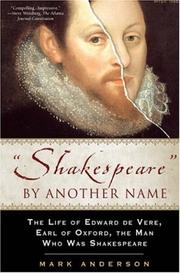 Shakespeare by Another Name: The Life of Edward de Vere, Earl of Oxford, the Man Who Was Shakespeare