The Religion of Democracy: Seven Liberals and the American Moral Tradition
Sign in to keep track of books you’ve read and want to read.
A history of religion's role in the American liberal tradition through the eyes of seven transformative thinkers
Today we associate liberal thought and politics with secularism. When we argue over whether the nation's founders meant to keep religion out of politics, the godless side is said to be liberal. But the role of religion in American politics has always been far more nuanced and complex than today's debates would suggest and closer to the heart of American intellectual life than is commonly understood. American democracy was intended by its creators to be more than just a political system, and in The Religion of Democracy, historian Amy Kittelstrom shows how religion and democracy have worked together as universal ideals in American culture—and as guides to moral action and the social practice of treating one another as equals who deserve to be free.
Read more
The first people in the world to call themselves "liberals" were New England Christians in the early republic, for whom being liberal meant being receptive to a range of beliefs and values. The story begins in the mid-eighteenth century, when the first Boston liberals brought the Enlightenment into Reformation Christianity, tying equality and liberty to the human soul at the same moment these root concepts were being tied to democracy. The nineteenth century saw the development of a robust liberal intellectual culture in America, built on open-minded pursuit of truth and acceptance of human diversity. By the twentieth century, what had begun in Boston as a narrow, patrician democracy transformed into a religion of democracy in which the new liberals of modern America believed that where different viewpoints overlap, common truth is revealed. The core American principles of liberty and equality were never free from religion but full of religion.
The Religion of Democracyre-creates the liberal conversation from the eighteenth century to the twentieth by tracing the lived connections among seven thinkers through whom they knew, what they read and wrote, where they went, and how they expressed their opinions—from John Adams to William James to Jane Addams; from Boston to Chicago to Berkeley. Sweeping and ambitious, The Religion of Democracyis a lively narrative of quintessentially American ideas as they were forged, debated, and remade across our history.
Liked The Religion of Democracy: Seven Liberals and the American Moral Tradition? Here’s where I’d start.
These suit anyone who liked The Religion of Democracy: Seven Liberals and the American Moral Tradition. Sign in and mark a few books for picks shaped around your own taste.
-
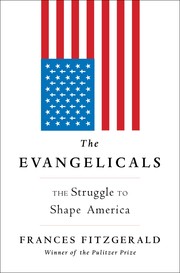 The Evangelicals: The Struggle to Shape America Shares religion, nonfiction, history
 -
 The Conservative Assault on the Constitution Shares nonfiction, politics, history
 -
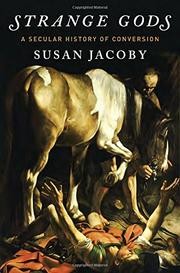 Strange Gods: A Secular History of Conversion Shares nonfiction, religion, history
 -
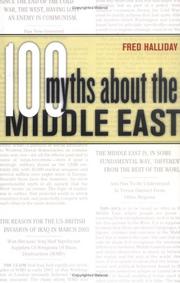 100 Myths about the Middle East Shares nonfiction, religion, history