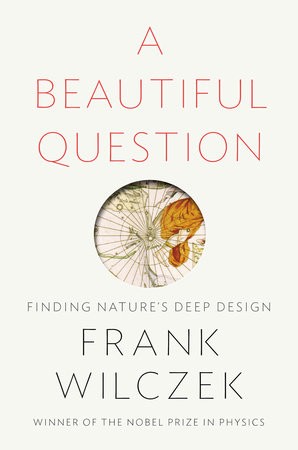
A Beautiful Question: Finding Nature's Deep Design
Sign in to keep track of books you’ve read and want to read.
Does the universe embody beautiful ideas?
Artists as well as scientists throughout human history have pondered this "beautiful question." With Nobel laureate Frank Wilczek as your guide, embark on a voyage of related discoveries, from Plato and Pythagoras up to the present. Wilczek's groundbreaking work in quantum physics was inspired by his intuition to look for a deeper order of beauty in nature. In fact, every major advance in his career came from this intuition: to assume that the universe embodies beautiful forms, forms whose hallmarks are symmetry—harmony, balance, proportion—and economy. There are other meanings of "beauty," but this is the deep logic of the universe—and it is no accident that it is also at the heart of what we find aesthetically pleasing and inspiring.
Read more
Wilczek is hardly alone among great scientists in charting his course using beauty as his compass. As he reveals in A Beautiful Question, this has been the heart of scientific pursuit from Pythagoras, the ancient Greek who was the first to argue that "all things are number," to Galileo, Newton, Maxwell, Einstein, and into the deep waters of twentiethcentury physics. Though the ancients weren't right about everything, their ardent belief in the music of the spheres has proved true down to the quantum level. Indeed, Wilczek explores just how intertwined our ideas about beauty and art are with our scientific understanding of the cosmos.
Wilczek brings us right to the edge of knowledge today, where the core insights of even the craziest quantum ideas apply principles we all understand. The equations for atoms and light are almost literally the same equations that govern musical instruments and sound; the subatomic particles that are responsible for most of our mass are determined by simple geometric symmetries. The universe itself, suggests Wilczek, seems to want to embody beautiful and elegant forms. Perhaps this force is the pure elegance of numbers, perhaps the work of a higher being, or somewhere between. Either way, we don't depart from the infinite and infinitesimal after all; we're profoundly connected to them, and we connect them. When we find that our sense of beauty is realized in the physical world, we are discovering something about the world, but also something about ourselves.
Gorgeously illustrated, A Beautiful Questionis a mind-shifting book that braids the age-old quest for beauty and the age-old quest for truth into a thrilling synthesis. It is a dazzling and important work from one of our best thinkers, whose humor and infectious sense of wonder animate every page. Yes: The world is a work of art, and its deepest truths are ones we already feel, as if they were somehow written in our souls.
Liked A Beautiful Question: Finding Nature's Deep Design? Here’s where I’d start.
These suit anyone who liked A Beautiful Question: Finding Nature's Deep Design. Sign in and mark a few books for picks shaped around your own taste.
-
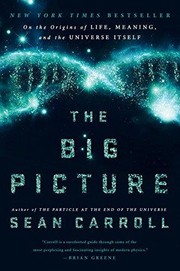 The Big Picture: On the Origins of Life, Meaning, and the Universe Itself Shares science, nonfiction, physics
 -
 The Island of Knowledge: The Limits of Science and the Search for Meaning Shares science, nonfiction, philosophy
 -
 The Beginning of Infinity: Explanations That Transform the World Shares science, nonfiction, philosophy
 -
 In the Mind Fields: Exploring the New Science of Neuropsychoanalysis Shares science, nonfiction