Economics Rules - The Rights and Wrongs of the Dismal Science
Sign in to keep track of books you’ve read and want to read.
"A hugely valuable contribution. . . . In setting out a defence of the best in economics, Rodrik has also provided a goal for the discipline as a whole." —Martin Sandbu, Financial Times In the wake of the financial crisis and the Great Recession, economics seems anything but a science. In this sharp, masterfully argued book, Dani Rodrik, a leading critic from within, takes a close look at economics to examine when it falls short and when it works, to give a surprisingly upbeat account of the discipline. Drawing on the history of the field and his deep experience as a practitioner, Rodrik argues that economics can be a powerful tool that improves the world—but only when economists abandon universal theories and focus on getting the context right. Economics Rules argues that the discipline's much-derided mathematical models are its true strength. Models are the tools that make economics a science. Too often, however, economists mistake a model for the model that applies everywhere and at all times. In six chapters that trace his discipline from Adam Smith to present-day work on globalization, Rodrik shows how diverse situations call for different models. Each model tells a partial story about how the world works. These stories offer wide-ranging, and sometimes contradictory, lessons—just as children's fables offer diverse morals. Whether the question concerns the rise of global inequality, the consequences of free trade, or the value of deficit spending, Rodrik explains how using the right models can deliver valuable new insights about social reality and public policy. Beyond the science, economics requires the craft to apply suitable models to the context. The 2008 collapse of Lehman Brothers challenged many economists' deepest assumptions about free markets. Rodrik reveals that economists' model toolkit is much richer than these free-market models. With pragmatic model selection, economists can develop successful antipoverty programs in Mexico, growth strategies in Africa, and intelligent remedies for domestic inequality. At once a forceful critique and defense of the discipline, Economics Rules charts a path toward a more humble but more effective science.
Liked Economics Rules - The Rights and Wrongs of the Dismal Science? Here’s where I’d start.
These suit anyone who liked Economics Rules - The Rights and Wrongs of the Dismal Science. Sign in and mark a few books for picks shaped around your own taste.
-
 The Economics Anti-Textbook: A Critical Thinker's Guide to Microeconomics Shares economics, nonfiction, econ
 -
 Principles of Economics Shares economics, nonfiction, economía
 -
 Inequality: What Can Be Done? Shares economics, nonfiction, economía
 -
 Debunking Economics - Revised and Expanded Edition: The Naked Emperor Dethroned? Shares economics, nonfiction, econ
“People who read Economics Rules - The Rights and Wrongs of the Dismal Science tend to reach for these next.”
-
 Between Debt and the Devil: Money, Credit, and Fixing Global Finance
-
 Phishing for Phools: The Economics of Manipulation and Deception
-
 Hall of Mirrors: The Great Depression, the Great Recession, and the Uses - and Misuses - of History
-
 Hive Mind: How Your Nation's IQ Matters So Much More Than Your Own
“If you want more of the same (economics), start with these.”


“If it was the history that hooked you, try one of these.”
-
 The Age of Diminished Expectations: U.S. Economic Policy in the 1990s
-
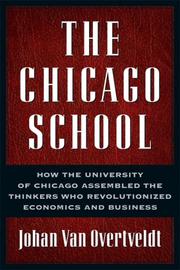 The Chicago School: How the University of Chicago Assembled the Thinkers Who Revolutionized Economics and Business
-
 Capitalism: Money, Morals and Markets
-
 Mindful Economics: How the U.S. Economy Works, Why it Matters, and How it Could Be Different