Uninformed: Why People Seem to Know So Little about Politics and What We Can Do about It
Sign in to keep track of books you’ve read and want to read.
Research polls, media interviews, and everyday conversations reveal an unsettling truth: citizens, while well-meaning and even passionate about current affairs, appear to know very little about politics. Hundreds of surveys document vast numbers of citizens answering even basic questions about government incorrectly. Given this unfortunate state of affairs, it is not surprising that more knowledgeable people often deride the public for its ignorance. Some experts even think that less informed citizens should stay out of politics altogether.
Read more
As Arthur Lupia shows in Uninformed, this is not constructive. At root, critics of public ignorance fundamentally misunderstand the problem. Many experts believe that simply providing people with more facts will make them more competent voters. However, these experts fail to understand how most people learn, and hence don't really know what types of information are even relevant to voters. Feeding them information they don't find relevant does not address the problem. In other words, before educating the public, we need to educate the educators.
Lupia offers not just a critique, though; he also has solutions. Drawing from a variety of areas of research on topics like attention span and political psychology, he shows how we can actually increase issue competence among voters in areas ranging from gun regulation to climate change. To attack the problem, he develops an arsenal of techniques to effectively convey to people information they actually care about.
Citizens sometimes lack the knowledge that they need to make competent political choices, and it is undeniable that greater knowledge can improve decision making. But we need to understand that voters either don't care about or pay attention to much of the information that experts think is important. Uninformed provides the keys to improving political knowledge and civic competence: understanding what information is important to others and knowing how to best convey it to them.
Liked Uninformed: Why People Seem to Know So Little about Politics and What We Can Do about It? Here’s where I’d start.
These suit anyone who liked Uninformed: Why People Seem to Know So Little about Politics and What We Can Do about It. Sign in and mark a few books for picks shaped around your own taste.
-
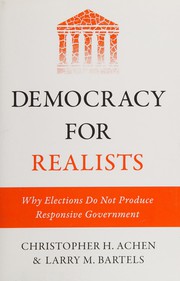
 The Gamble: Choice and Chance in the 2012 Presidential Election Shares politics, nonfiction, political science
 -
 Maximalist: America in the World from Truman to Obama Shares politics, history, nonfiction
 -
 Contrary Notions: The Michael Parenti Reader Shares politics, nonfiction, history
 -
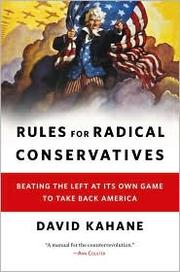 Rules for Radical Conservatives: Beating the Left at Its Own Game to Take Back America Shares politics, political science, nonfiction