A rule of property for Bengal
Sign in to keep track of books you’ve read and want to read.
Guha is one of the colleagues of Gayatri Chakravorty Spivak's Subaltern Studies group in India. Edward Said, in his book *Culture and Imperialism* (1993) says, "Guha is . . . concerned with the problematic of continuity and discontinuity" [in postcolonial countries] and "for [Guha] the issue has autobiographical resonances, given his profoundly self-conscious methodological preoccupations. How is one to study the Indian past as radically affected by British power?"
Read more
The book examines the radical effects of the 1790-1800 Permanent Settlement ruling of the British colonial administration, which created a new landowning class of Indians who collaborated as civil servants with the administration, and thereby the ruling encouraged a making of land ownership into a market commodity, as colonialism did generally in subjugated countries. The commodification of land lent itself to an emphasis on cash crop monocultures for resale to the Colonial power and led to some of the worst famines of the nineteenth century. The inciting question for Guha was, in his words, "How was it that the quasi-feudal land settlement of 1793 had originated from the ideas of a man [Philip Francis] who was a great admirer of the French Revolution? One could not know from the history books that such a contradiction existed and had to be explained."
Liked A rule of property for Bengal? Here’s where I’d start.
These suit anyone who liked A rule of property for Bengal. Sign in and mark a few books for picks shaped around your own taste.
-
For the common good Shares land tenure, law and legislation, politics
-
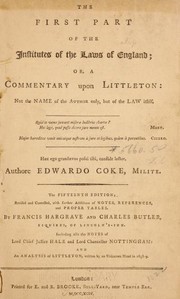 The first part of the Institutes of the Lawes of England Shares land tenure, law and legislation, history
-
In the Shadow of Shari'ah: Islam, Islamic Law, and Democracy in Pakistan Shares land tenure, law and legislation, history
-
 When a Flower Is Reborn: The Life and Times of a Mapuche Feminist Shares land tenure, politics, history