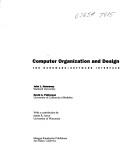
Cover of Systems programming

Systems programming

An introductory textbook on the design of systems software, the programs that sit between application code and the computer's hardware. It explains how assemblers, loaders, linkers and operating system components are built and how they manage memory, input and output and the scheduling of tasks. The discussion mixes general principles with concrete examples, showing how language translators and supervisory software cooperate. Written in the early 1970s, when mainframe batch processing and machine-level coding were central to the field, it suits students who want to understand what happens beneath high-level languages and how software controls shared machine resources.

Audience
adult
Length
long · 488 pages

Click a tag to see books like this one that share it. Point at it (on a phone, tap it) for less of it instead.

Read it? Sign in to help tag it.

Liked Systems programming? Here’s where I’d start.

These suit anyone who liked Systems programming. Sign in and mark a few books for picks shaped around your own taste.
  1. Algorithms + data structures=programs Shares computer programming, computers
  2. Practical C Programming Shares computer programming, computers
  3. How to Design Programs Shares computer programming, computers
  4. Mastering Blockchain Shares computer programming

“If you want more of the same, start with these.”

  1. Exam Ref 70-410: Installing and Configuring Windows Server 2012
  2. Django for Beginners
  3. Against Technoableism
  4. JavaScript Basics for Beginners

“If it was the computer programming that hooked you, try one of these.”

  1. Computer graphics
  2. Teach yourself C++
  3. Introduction To Computation And Programming Using Python
  4. Introduction to Java Programming: Fundamentals First

“These start from a similar idea, even if they go somewhere else with it.”

  1. Computer architecture and organisation
  2. Computer Organization & Design: The Hardware/Software Interface
  3. Physics for Computer Science Students
  4. The Elements of Computing Systems: Building a Modern Computer from First Principles