Workshop statistics
Sign in to keep track of books you’ve read and want to read.
Workshop Statistics is an introductory textbook built around active learning. Instead of starting with formulas, students work through activities in small groups, gathering and analysing real data and using simulation and computer tools to explore ideas such as variation, sampling and inference. The method is designed to build intuition first, so that the standard procedures make sense when they arrive. It suits undergraduates taking a first course in statistics, and it is meant to be used alongside class discussion rather than read alone.
Liked Workshop statistics? Here’s where I’d start.
These suit anyone who liked Workshop statistics. Sign in and mark a few books for picks shaped around your own taste.
-
 Elementary Statistics Shares science mathematics, statistics, mathematics
-
 Intro stats Shares science mathematics, statistics, mathematics
-
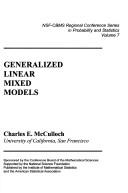 Generalized, linear, and mixed models Shares science mathematics, statistics, mathematics
-
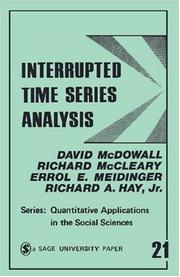 Interrupted time series analysis Shares science mathematics, statistics, mathematics