The death of money
Sign in to keep track of books you’ve read and want to read.
Ever wonder why today's corporate leaders can't seem to plan for the long term? Why government can't control inflation? Why the stock market is more volatile than ever? Why interest rates rise and fall like the tides? Why economic forecasts never seem to be right? In The Death of Money, Joel Kurtzman, an economist and business columnist for The New York Times, brilliantly and convincingly argues that economic stability and a rapid rate of growth, once America's.
Read more
Hallmarks, have been lost because the fundamental nature of money has changed. Money - in the traditional sense - died two decades ago with a single stroke of Richard Nixon's presidential pen. What followed was twenty years of a new economic disorder that began with soaring oil, gold, and real estate prices and continued with an unprecedented consumption binge by government agencies and the citizenry alike. In the twenty years of chaos, we've seen the savings and loan.
Industry collapse, the banking system become weaker, eclipsed by the economy of finance, and an entirely new global medium of exchange created that Kurtzman calls "megabyte money." Most economists, Kurtzman argues, still don't know what - or how - it all happened. Megabyte money is different from anything that has preceded it - and from the money jingling in your pocket or purse. It is part of an intricate and fragile electronic system of truly global dimensions and of.
Amazing complexity. It is a nonstop, seven-day-a-week, 24-hour network that links tens of thousands of computers in places as lofty as the Federal Reserve and the Tokyo Stock Exchange and as lowly as the automated gasoline pump that accepts credit cards. Megabyte money has created an entirely new global economy, one which, Kurtzman warns, is still largely unregulated, where government agencies, including the Federal Reserve and the Treasury, have ceded much power to the.
World's bankers, speculators, corporate treasurers, financiers, and computer programmers. In The Death of Money, Kurtzman vividly explains how this new megabyte economy enables brokers to electronically bundle up your home mortgage with dozens of others, convert them into jumbo securities like a bond, and sell those securities to investors in Germany or Japan. In the new megabyte economy, Nobel Prize-winning equations are programmed into the computers at mutual fund.
Companies, and mathematicians, physicists, and even rocket scientists are replacing the stock pickers of the past. In the megabyte economy, money is nothing more than the "1's" and "0's" of the computer's code. Moving instantly along electronic highways, $1.9 trillion changes hands each day in New York alone. Information - even wrong or incomplete information - instantly affects prices around the world. The death of money has created a strange new world most people have.
Little knowledge of. It is a world that is far more volatile and chaotic than anything that has preceded it. Though this new world economic order evolved without a plan, Kurtzman warns that efficient new mechanisms must now be put into place to bring the economy under control. If we do so, he says, the vast, productive resources of our nation can again serve our needs.
Liked The death of money? Here’s where I’d start.
These suit anyone who liked The death of money. Sign in and mark a few books for picks shaped around your own taste.
-
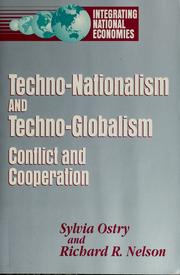 Techno-nationalism and techno-globalism Shares technological innovations, economic history, history
-
 The Money Code: Become a Millionaire With the Ancient Jewish Code Shares money, finance
-
 The Budget Kit: The Common Cents Money Management Workbook Shares finance, money
-
 Well-Heeled: The Smart Girl's Guide to Getting Rich Shares money, finance
“If you want more of the same (business about wealth), start with these.”


“If it was the money that hooked you, try one of these.”
-
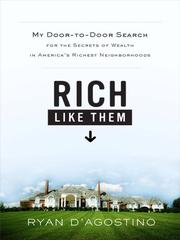 Rich Like Them: My Door-to-Door Search for the Secrets of Wealth in America's Richest Neighborhoods
-
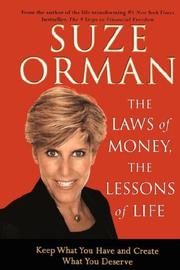 The Laws of Money, the Lessons of Life: 5 Timeless Secrets to Get Out and Stay Out of Financial Trouble
-
 The Real Cost of Living: Making the Best Choices for You, Your Life, and Your Money
-
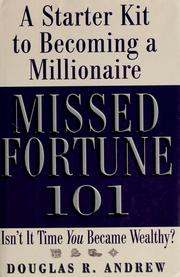 Missed Fortune 101: A Starter Kit to Becoming a Millionaire