Modelling survival data in medical research
Sign in to keep track of books you’ve read and want to read.
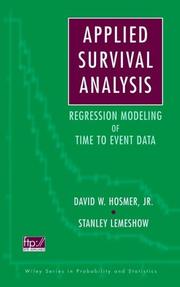
Provides an outstanding text for upper-level and graduate courses in survival analysis, biostatistics, and time-to-event analysis. This edition features a more detailed treatment of topics such as parametric models, accelerated failure time models, and the analysis of interval-censored data. The author also focuses the software section on the use of SAS, summarising the methods used by the software to generate its output and examining that output in detail.
Liked Modelling survival data in medical research? Here’s where I’d start.
These suit anyone who liked Modelling survival data in medical research. Sign in and mark a few books for picks shaped around your own taste.
-
 Concrete Mathematics: A Foundation for Computer Science Shares computer science, mathematics
-
 In Pursuit of the Traveling Salesman: Mathematics at the Limits of Computation Shares mathematics, computer science
-
 Computers and Intractability: A Guide to the Theory of NP-Completeness Shares computer science, mathematics
-
 Mechanical Intelligence: Collected Works of A.M. Turing Shares computer science, mathematics