The eagle triumphant
Sign in to keep track of books you’ve read and want to read.
"Though many Americans are reluctant to admit it, the United States has long been an imperial power - a fact that has become increasingly evident since the war in Iraq. Now, in this book, historian Robert Smith Thompson examines the origins of the American empire in the period spanning the two world wars. Confounding the conventional view of early-twentieth-century America - an idealistic, isolationist nation only reluctantly drawn into world affairs - he shows how the United States deliberately set out to dismantle the British Empire and take over its spheres of influence." "Capturing the personalities and events that precipitated the American imperium - from Woodrow Wilson, Franklin Delano Roosevelt, and Winston Churchill to the sinking of the Lusitania, the advent of Lend-Lease, and the conference at Yalta - Thompson argues that U.S. ascendence began with Britain's decision to enter World War I. Though Britain helped engineer America's subsequent entry into that war, President Wilson's Fourteen Points called not only for the defeat of Germany, but for the dissolution of British and French colonial empires - a goal that persisted in succeeding American administrations, and not merely for Wilson's ideal of "self-determination": colonial empires were restricted markets, but freed colonies would be free to trade with the United States." "In the interwar years, American troops demobilized, but American money carried the day, prying open markets as Britain's imperial possessions seethed with rebellion. After tariff wars and the depression of the 1930's, and then Dunkirk and the 1940 German bombing campaign, Britain was broke. By the time President Roosevelt began supplying Churchill with Lend-Lease war material, the country had become an American vassal - a fact that Roosevelt exploited throughout the war as he set the stage for a new world order under American dominion. At the war's end, Britain was largely irrelevant: its empire was dissolving and its client states were cutting deals with the United States. It was America that would go on to rebuild Europe and Japan, envelop the world with money and military bases, and play an updated version of Britain's nineteenth-century "great game" - the containment of Russia." "By meticulously tracking the transition from Pax Britannica to Pax Americana, Thompson clarifies the original aims and scope of America's empire - and offers a unique historical perspective on recent events in the Middle East."—BOOK JACKET.
Liked The eagle triumphant? Here’s where I’d start.
These suit anyone who liked The eagle triumphant. Sign in and mark a few books for picks shaped around your own taste.
-
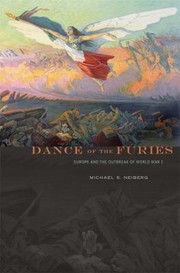 Dance Of The Furies Europe And The Outbreak Of World War I Shares World War I, diplomatic history, history
-
 DECOLONIZATION Shares imperialism, World War I, World War II
-
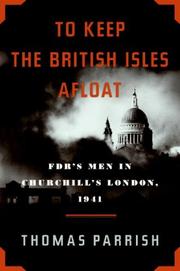 "To keep the British Isles afloat" Shares diplomatic history, World War II, politics
-
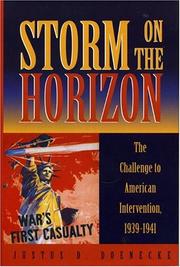 Storm on the Horizon Shares diplomatic history, World War II, politics