Vision's immanence
Sign in to keep track of books you’ve read and want to read.
"To what extent was William Faulkner's deeply ambivalent relationship to - and involvement with - American popular culture reflected in his modernist or "art" fiction? Peter Lurie finds convincing evidence that Faulkner was keenly aware of commercial culture and adapted its formulas, strategies, and in particular, its visual techniques into the language of his novels of the 1930s. Lurie contends that Faulkner's modernism can be best understood in light of his reaction to the popular culture of his day." "Lurie takes particular interest in the influence of cinema on Faulkner's fiction and the visual strategies he both deployed and critiqued. These include the suggestion of cinematic viewing on the part of readers and of characters in each of the novels; the collective and individual acts of voyeurism in Sanctuary and Light in August; the exposing in Absalom! Absalom! and Light in August of stereotypical and cinematic patterns of thought about history and race; and the evocation of popular forms like melodrama and the movie screen in If I forget thee, Jerusalem. Offering innovative readings of these canonical works, this study sheds new light on Faulkner's uniquely American modernism."—BOOK JACKET.
Liked Vision's immanence? Here’s where I’d start.
These suit anyone who liked Vision's immanence. Sign in and mark a few books for picks shaped around your own taste.
-
 Screening gender, framing genre Shares film and video adaptations, film adaptations, movies
-
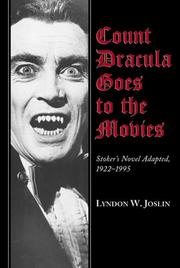 Count Dracula goes to the movies Shares film and video adaptations, film adaptations, movies
-
 Fantasy fiction into film Shares film and video adaptations, film adaptations, movies
-
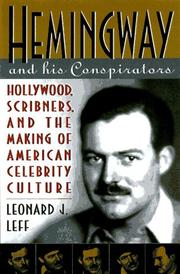 Hemingway and His Conspirators: Hollywood, Scribners, and the Making of the American Dream Shares film and video adaptations, film adaptations, movies