Feminism, Time, and Nonlinear History
Sign in to keep track of books you’ve read and want to read.
How can feminism draw productively on its own history, without passively conforming to expectations of the past, or elevating the past as a nostalgic ideal against which to measure and compare the present? Feminism, Time, and Nonlinear History proposes an innovative 'polytemporal' model of historical time in relation to feminist historiography. Interweaving phenomenological, hermeneutical, and sociopolitical analyses, this book considers the ways in which feminists conceptualize and produce the temporalities of feminism, including the time of the trace, narrative time, calendar time, and generational time.
Liked Feminism, Time, and Nonlinear History? Here’s where I’d start.
These suit anyone who liked Feminism, Time, and Nonlinear History. Sign in and mark a few books for picks shaped around your own taste.
-
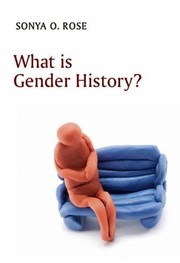 What Is Gender History Shares feminist theory, gender identity, philosophy
-
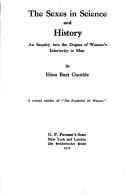 Free onlineFree
The sexes in science and history Shares gender identity, sex, sociology
-
 ONTOLOGY OF SEX: A CRITICAL INQUIRY INTO THE DECONSTRUCTION AND RECONSTRUCTION OF CATEGORIES Shares feminist theory, sex, philosophy
-
 Ecofeminism as politics Shares feminist theory, feminism, politics