Cover of Probable Impossibilities

Probable Impossibilities

In these essays, Alan Lightman turns to the open questions at the edge of modern physics and cosmology. He considers whether the universe is governed by chance or design, what it means for an idea to be possible but unproven, and how scientists and philosophers reason about things they cannot directly observe.

Read more

Lightman writes in a reflective, personal voice, weaving scientific ideas together with questions about meaning, time and our place in the cosmos. The book is aimed at general readers who want to think seriously about the limits of knowledge without needing advanced mathematics.

Audience
adult
Length
medium · 224 pages

Click a tag to see books like this one that share it. Point at it (on a phone, tap it) for less of it instead.

Read it? Sign in to help tag it.

Liked Probable Impossibilities? Here’s where I’d start.

These suit anyone who liked Probable Impossibilities. Sign in and mark a few books for picks shaped around your own taste.

  1. Until the End of Time Shares cosmology, astronomy, physics
  2. Introduction to Cosmology Shares cosmology, physics, astronomy
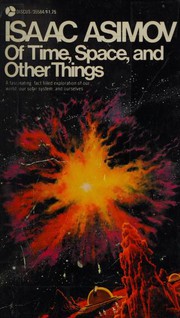
  3. Of Time and Space and Other Things [17 essays] Shares cosmology, metaphysics, astronomy
  4. Principles of Physical Cosmology Shares physics, astronomy, cosmology

“If you want more of the same (science about philosophy), start with these.”

  1. Star Wave
  2. Scientific progress
  3. A Mind So Rare: The Evolution of Human Consciousness
  4. Space-time and beyond : toward an explanation of the unexplainable

“If it was the astronomy that hooked you, try one of these.”

  1. Cosmic Catastrophes: Exploding Stars, Black Holes, and Mapping the Universe
  2. The Nature of the Universe
  3. The Infinite Cosmos: Questions from the Frontiers of Cosmology
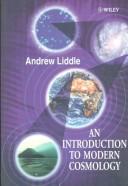
  4. An Introduction to Modern Cosmology

“These start from a similar idea, even if they go somewhere else with it.”

  1. When Einstein Walked with Gödel
  2. A sense of the cosmos
  3. The Singular Universe and the Reality of Time: A Proposal in Natural Philosophy
  4. What We Cannot Know