Pollution Is Colonialism
Sign in to keep track of books you’ve read and want to read.
In ***Pollution is Colonialism*** Max Liboiron presents a framework for understanding scientific research methods as practices that can align with or against colonialism. She points out that even when researchers are working toward benevolent goals, conducting environmental science and activism is often premised on a colonial worldview and access to land. Focusing on plastic pollution, Liboiron models an anticolonial scientific practice aligned with Indigenous, and particularly Métis, concepts of land, ethics, and relations. She draws on her work in the Civic Laboratory for Environmental Action Research (CLEAR)—an anticolonial science laboratory in Newfoundland, Canada—to illuminate how pollution is not a symptom of capitalism, but a violent enactment of colonial land relations that claim access to Indigenous land. Her creative, lively, and passionate text refuses theories of pollution that make Indigenous land available for settler and colonial goals. In this way, her methodology demonstrates that anticolonial science is not only possible, it is currently being practiced in ways that enact more ethical modes of being in the world.
Liked Pollution Is Colonialism? Here’s where I’d start.
These suit anyone who liked Pollution Is Colonialism. Sign in and mark a few books for picks shaped around your own taste.
-
 Transportation Shares environmentalism, pollution, ecology
-
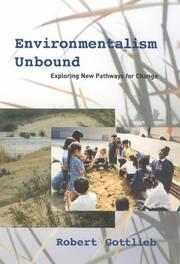 Environmentalism Unbound Shares environmentalism, pollution, politics
-
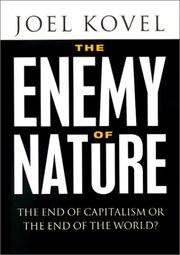 The Enemy of Nature: The End of Capitalism or the End of the World? Shares politics, ecology, environmentalism
-
 Endgame, Vol. 2: Resistance Shares environment, ecology, politics