Toward a new diagnostic system for child psychopathology
Sign in to keep track of books you’ve read and want to read.
Brings together leading child psychiatry researchers to critically review the current diagnostic system and work toward new, more clinically useful ways of understanding childhood problems. The authors examine how existing diagnostic categories as embodied in the DSM-IV do not adequately account for the interplay between maladaptive behavior on the one hand, and children's environmental contexts, relationships, and developmental needs on the other. Drawing on the latest findings from neurobiological and evolutionary research, the book offers fresh perspectives on the nature, causes, assessment, and treatment of a range of prevalent disorders. The concluding chapter offers specific, cogent suggestions for improving the forthcoming DSM-V.
Liked Toward a new diagnostic system for child psychopathology? Here’s where I’d start.
These suit anyone who liked Toward a new diagnostic system for child psychopathology. Sign in and mark a few books for picks shaped around your own taste.
-
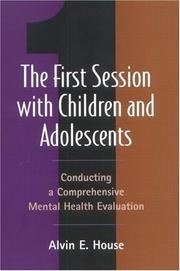 The First Session with Children and Adolescents Shares adolescent, mental disorders
-
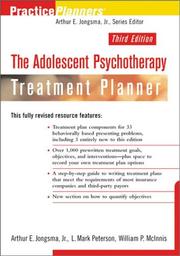 The adolescent psychotherapy treatment planner Shares adolescent, mental disorders
-
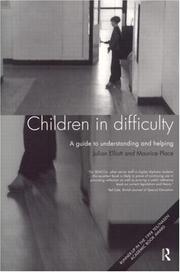 Children in difficulty Shares adolescent, mental disorders
-
 Handbook of prevention and treatment with children and adolescents Shares adolescent, mental disorders