Global Woman: Nannies, Maids, and Sex Workers in the New Economy
Sign in to keep track of books you’ve read and want to read.
In a remarkable pairing, two renowned social critics offer a groundbreaking anthology that examines the unexplored consequences of globalization on the lives of women worldwide.Women are moving around the globe as never before. But for every female executive racking up frequent flier miles there are multitudes of women whose journeys go unnoticed. Each year, millions leave Mexico, Sri Lanka, the Philippines, and other third world countries to work in the homes, nurseries, and brothels of the first world. This broad-scale transfer of labor associated with women's traditional roles results in an odd displacement. In the new global calculus, the female energy that flows to wealthy countries is subtracted from poor ones, often to the detriment of the families left behind. The migrant nanny or cleaning woman, nursing-care attendant, maid eases a "care deficit" in rich countries, while her absence creates one back home.
Read more
Confronting a range of topics, from the fate of Vietnamese mail-order brides to the importation of Mexican nannies in Los Angeles and the selling of Thai girls to Japanese brothels, a diverse and distinguised group of writers offer an unprecedented look at a world shaped by mass migration and economic exchange. Collected and introduced by bestselling authors Barbara Ehrenreich and Arlie Russell Hochschild, these fifteen essays of which only four have been previously published reveal a new era in which the main resource extracted from the third world is no longer gold or silver, but love.
Barbara Ehrenreichis the author of New York Timesbestsellers Nickel and Dimedand The Worst Years of Our Lives, as well as Blood Rites. She lives near Key West, Florida.
Arlie Russell Hochschild is the author of national bestsellers The Time Bindand The Second Shift. She live in San Francisco, California.
Liked Global Woman: Nannies, Maids, and Sex Workers in the New Economy? Here’s where I’d start.
These suit anyone who liked Global Woman: Nannies, Maids, and Sex Workers in the New Economy. Sign in and mark a few books for picks shaped around your own taste.
-
 The Gender Knot: Unraveling Our Patriarchal Legacy Shares feminism, nonfiction, gender
 -
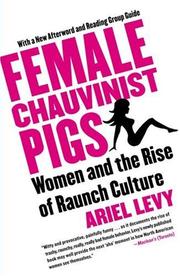 Female Chauvinist Pigs: Women and the Rise of Raunch Culture Shares feminism, nonfiction, feminist
 -
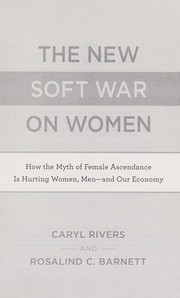 The New Soft War on Women: How the Myth of Female Ascendance Is Hurting Women, Men and Our Economy Shares feminism, nonfiction, sociology
 -
 Bananas, Beaches and Bases: Making Feminist Sense of International Politics Shares feminism, nonfiction, feminist