Information Architecture for the World Wide Web: Designing Large-Scale Web Sites
Sign in to keep track of books you’ve read and want to read.
The post-Ajaxian Web 2.0 world of wikis, folksonomies, and mashups makes well-planned information architecture even more essential. How do you present large volumes of information to people who need to find what they're looking for quickly? This classic primer shows information architects, designers, and web site developers how to build large-scale and maintainable web sites that are appealing and easy to navigate.
Read more
The new edition is thoroughly updated to address emerging technologies — with recent examples, new scenarios, and information on best practices — while maintaining its focus on fundamentals. With topics that range from aesthetics to mechanics, Information Architecture for the World Wide Webexplains how to create interfaces that users can understand right away.
Inside, you'll find:
* An overview of information architecture for both newcomers and experienced practitioners
* The fundamental components of an architecture, illustrating the interconnected nature of these systems. Updated, with updates for tagging, folksonomies, social classification, and guided navigation
* Tools, techniques, and methods that take you from research to strategy and design to implementation. This edition discusses blueprints, wireframes and the role of diagrams in the design phase
* A series of short essays that provide practical tips and philosophical advice for those who work on information architecture
* The business context of practicing and promoting information architecture, including recent lessons on how to handle enterprise architecture
* Case studies on the evolution of two large and very different information architectures, illustrating best practices along the way
* How do you document the rich interfaces of web applications? How do you design for multiple platforms and mobile devices? With emphasis on goals and approaches over tactics or technologies, this enormously popular book gives you knowledge about information architecture with a framework that allows you to learn new approaches — and unlearn outmoded ones.
Liked Information Architecture for the World Wide Web: Designing Large-Scale Web Sites? Here’s where I’d start.
These suit anyone who liked Information Architecture for the World Wide Web: Designing Large-Scale Web Sites. Sign in and mark a few books for picks shaped around your own taste.
-
 Information Architecture: Blueprints for the Web Shares information architecture, ux, web
 -
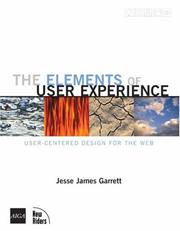 The Elements of User Experience: User-Centered Design for the Web Shares ux, ux design, user experience
 -
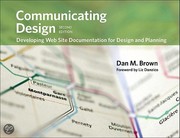 Communicating Design: Developing Web Site Documentation for Design and Planning Shares ux, design, web
 -
 Content Strategy for the Web Shares web, ux, web design
“People who read Information Architecture for the World Wide Web: Designing Large-Scale Web Sites tend to reach for these next.”

“If you want more of the same (science about technology), start with these.”



“If it was the web that hooked you, try one of these.”
-
 Implementing Responsive Design: Building Sites for an Anywhere, Everywhere Web
-
 Web Style Guide: Basic Design Principles for Creating Web Sites
-
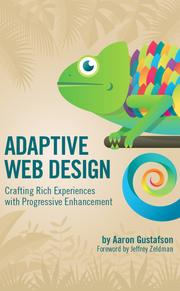 Adaptive Web Design: Crafting Rich Experiences with Progressive Enhancement
-
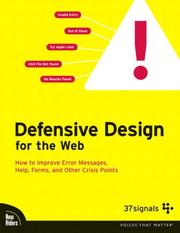 Defensive Design for the Web: How to Improve Error Messages, Help, Forms, and Other Crisis Points