Mathematics: A Very Short Introduction
Book 66 of the Very Short Introductions series
Sign in to keep track of books you’ve read and want to read.
The aim of this book is to explain, carefully but not technically, the differences between advanced, research-level mathematics, and the sort of mathematics we learn at school. The most fundamental differences are philosophical, and readers of this book will emerge with a clearer understanding of paradoxical-sounding concepts such as infinity, curved space, and imaginary numbers. The first few chapters are about general aspects of mathematical thought. These are followed by discussions of more specific topics, and the book closes with a chapter answering common sociological questions about the mathematical community (such as "Is it true that mathematicians burn out at the age of 25?") It is the ideal introduction for anyone who wishes to deepen their understanding of mathematics.
About the Series: Combining authority with wit, accessibility, and style, Very Short Introductions offer an introduction to some of life's most interesting topics. Written by experts for the newcomer, they demonstrate the finest contemporary thinking about the central problems and issues in hundreds of key topics, from philosophy to Freud, quantum theory to Islam.
Liked Mathematics: A Very Short Introduction? Here’s where I’d start.
These suit anyone who liked Mathematics: A Very Short Introduction. Sign in and mark a few books for picks shaped around your own taste.
-
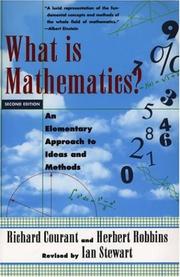 What Is Mathematics?: An Elementary Approach to Ideas and Methods Shares mathematics, math, maths
 -
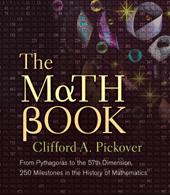 The Math Book: From Pythagoras to the 57th Dimension, 250 Milestones in the History of Mathematics Shares mathematics, math, science
 -
 Symmetry and the Monster: One of the Greatest Quests of Mathematics Shares mathematics, math, maths
 -
 The Mathematical Experience Shares math, mathematics, maths