
The Competitive Advantage of Nations
Sign in to keep track of books you’ve read and want to read.
Now beyond its eleventh printing and translated into twelve languages, Michael Porter's The Competitive Advantage of Nationshas changed completely our conception of how prosperity is created and sustained in the modern global economy. Porter's groundbreaking study of international competitiveness has shaped national policy in countries around the world. It has also transformed thinking and action in states, cities, companies, and even entire regions such as Central America.
Based on research in ten leading trading nations, The Competitive Advantage of Nationsoffers the first theory of competitiveness based on the causes of the productivity with which companies compete. Porter shows how traditional comparative advantages such as natural resources and pools of labor have been superseded as sources of prosperity, and how broad macroeconomic accounts of competitiveness are insufficient. The book introduces Porter's "diamond," a whole new way to understand the competitive position of a nation (or other locations) in global competition that is now an integral part of international business thinking. Porter's concept of "clusters," or groups of interconnected firms, suppliers, related industries, and institutions that arise in particular locations, has become a new way for companies and governments to think about economies, assess the competitive advantage of locations, and set public policy.
Read more
Even before publication of the book, Porter's theory had guided national reassessments in New Zealand and elsewhere. His ideas and personal involvement have shaped strategy in countries as diverse as the Netherlands, Portugal, Taiwan, Costa Rica, and India, and regions such as Massachusetts, California, and the Basque country. Hundreds of cluster initiatives have flourished throughout the world. In an era of intensifying global competition, this pathbreaking book on the newwealth of nations has become the standard by which all future work must be measured.
Liked The Competitive Advantage of Nations? Here’s where I’d start.
These suit anyone who liked The Competitive Advantage of Nations. Sign in and mark a few books for picks shaped around your own taste.
-
 Co-Opetition Shares business, strategy, economics
 -
 Billions of Entrepreneurs: How China and India Are Reshaping Their Futures—and Yours Shares business, economics, nonfiction
 -
 The Art of Strategy: A Game Theorist's Guide to Success in Business and Life Shares business, strategy, economics
 -
 Alignment: Using the Balanced Scorecard to Create Corporate Synergies Shares business, strategy, management
“People who read The Competitive Advantage of Nations tend to reach for these next.”
-
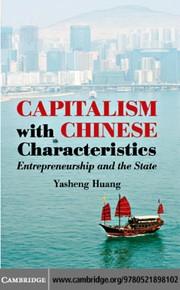 Capitalism with Chinese Characteristics: Entrepreneurship and the State
-
 Strategy Safari: A Guided Tour Through The Wilds of Strategic Mangament
-
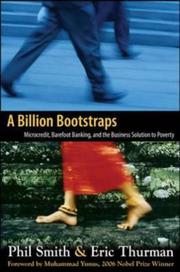 A Billion Bootstraps: Microcredit, Barefoot Banking, and the Business Solution for Ending Poverty
-
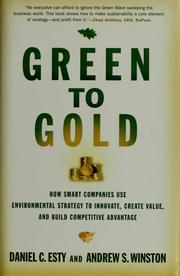 Green to Gold: How Smart Companies Use Environmental Strategy to Innovate, Create Value, and Build Competitive Advantage
“If you want more of the same (business about politics), start with these.”



“If it was the strategy that hooked you, try one of these.”
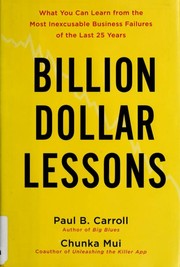


“These start from a similar idea, even if they go somewhere else with it.”
-
 The End of Competitive Advantage: How to Keep Your Strategy Moving as Fast as Your Business
-
 Innovation Nation: How America Is Losing Its Innovation Edge, Why It Matters, and What We Can Do to Get It Back
-
 The End of the Free Market: Who Wins the War Between States and Corporations?
-
 Blue Ocean Strategy: How To Create Uncontested Market Space And Make The Competition Irrelevant