Machete Season: The Killers in Rwanda Speak
Rwanda series The Antelope's Strategy: Living in Rwanda After the Genocide(2007) →
Sign in to keep track of books you’ve read and want to read.
In April-May 1994, 800,000 Rwandan Tutsis were massacred by their Hutu fellow citizens—about 10,000 a day, mostly being hacked to death by machete. In Machete Season, the veteran foreign correspondent Jean Hatzfeld reports on the results of his interviews with nine of the Hutu killers. They were all friends who came from a single region where they helped to kill 50,000 out of their 59,000 Tutsi neighbors, and all of them are now in prison, some awaiting execution. It is usually presumed that killers will not tell the truth about their brutal actions, but Hatzfeld elicited extraordinary testimony from these men about the genocide they had perpetrated. He rightly sees that their account raises as many questions as it answers.
Read more
Adabert, Alphonse, Ignace, and the others (most of them farmers) told Hatzfeld how the work was given to them, what they thought about it, how they did it, and what their responses were to the bloodbath. "Killing is easier than farming," one says. "I got into it, no problem," says another. Each describes what it was like the first time he killed someone, what he felt like when he killed a mother and child, how he reacted when he killed a cordial acquaintance, how 'cutting' a person with a machete differed from 'cutting' a calf or a sugarcane. And they had plenty of time to tell Hatzfeld, too, about whether and why they had reconsidered their motives, their moral responsibility, their guilt, remorse, or indifference to the crimes.
Hatzfeld's meditation on the banal, horrific testimony of the genocidaires and what it means is lucid, humane, and wise: he relates the Rwanda horror to war crimes and to other genocidal episodes in human history. Especially since the Holocaust, it has been conventional to presume that only depraved and monstrous evil incarnate could perpetrate such crimes, but it may be, he suggests, that such actions are within the realm of ordinary human conduct. To read this disturbing, enlightening and very brave book is to consider in a new light the foundation of human morality and ethics.
Liked Machete Season: The Killers in Rwanda Speak? Here’s where I’d start.
These suit anyone who liked Machete Season: The Killers in Rwanda Speak. Sign in and mark a few books for picks shaped around your own taste.
-
 Season of Blood: A Rwandan Journey Shares Africa, Rwanda, nonfiction
 -
 When Victims Become Killers: Colonialism, Nativism, and the Genocide in Rwanda Shares Africa, Rwanda, nonfiction
 -
 A Thousand Hills: Rwanda's Rebirth and the Man Who Dreamed It Shares Africa, Rwanda, nonfiction
 -
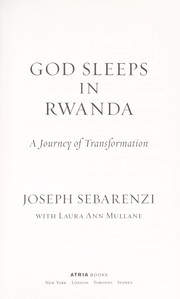 God Sleeps in Rwanda: A Journey of Transformation Shares Africa, Rwanda, nonfiction