The Great Mirror of Male Love
Sign in to keep track of books you’ve read and want to read.
The first complete translation of Nanshoku okagami by Ihara Saikaku (1642-93), this is a collection of 40 stories describing homosexual love affairs between samurai men and boys and between young kabuki actors and their middle-class patrons. Seventeenth-century Kyoto was the center of a flourishing publishing industry, and for the first time in Japan's history it became possible for writers to live exclusively on their earnings. Saikaku was the first to actually do so. As a popular writer, Saikaku wanted to entertain his readership. When he undertook the writing of Nanshoku okagami in 1687, it was with the express purpose of extending his readership and satisfying his ambition to be published in the three major cities of his day, Kyoto, Osaka, and Edo. He chose the topic of male homosexual love because it had the broadest appeal both to the samurai men of Edo and to the townsmen of Kyoto and Osaka, his regular audience. Homosexual relations between a man and a boy were a regular feature of premodern Japanese culture and carried no stigma. When a boy reached the age of nineteen, he underwent a coming-of-age ceremony, after which he took the adult role in relations with boys.
Liked The Great Mirror of Male Love? Here’s where I’d start.
These suit anyone who liked The Great Mirror of Male Love. Sign in and mark a few books for picks shaped around your own taste.
-
 Male Colors: The Construction of Homosexuality in Tokugawa Japan Shares Japan, LGBT, nonfiction
 -
 As I Crossed a Bridge of Dreams: Recollections of a Woman in Eleventh-Century Japan Shares Japan, japanese, japanese literature
 -
 Forbidden Colors Shares Japan, japanese, LGBT
 -
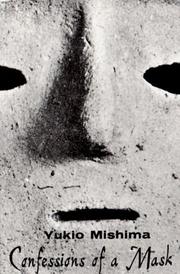 Confessions of a Mask Shares Japan, japanese, japanese literature