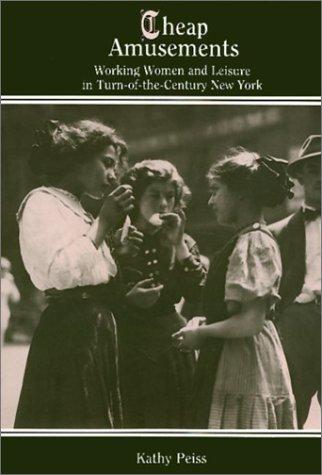
Cheap Amusements: Working Women and Leisure in Turn-of-the-Century New York
Sign in to keep track of books you’ve read and want to read.
What did young, independent women do for fun and how did they pay their way into New York City's turn-of-the-century pleasure places? Cheap Amusements is a fascinating discussion of young working women whose meager wages often fell short of bare subsistence and rarely allowed for entertainment expenses.
Read more
Kathy Peiss follows working women into saloons, dance halls, Coney Island amusement parks, social clubs, and nickelodeons to explore the culture of these young women between 1880 and 1920 as expressed in leisure activities. By examining the rituals and styles they adopted and placing that culture in the larger context of urban working-class life, she offers us a complex picture of the dynamics shaping a working woman's experience and consciousness at the turn-of-the-century. Not only does her analysis lead us to new insights into working-class culture, changing social relations between single men and women, and urban courtship, but it also gives us a fuller understanding of the cultural transformations that gave rise to the commercialization of leisure.
The early twentieth century witnessed the emergence of "heterosocial companionship" as a dominant ideology of gender, affirming mixed-sex patterns of social interaction, in contrast to the nineteenth century's segregated spheres. Cheap Amusements argues that a crucial part of the "reorientation of American culture" originated from below, specifically in the subculture of working women to be found in urban dance halls and amusement resorts.
Liked Cheap Amusements: Working Women and Leisure in Turn-of-the-Century New York? Here’s where I’d start.
These suit anyone who liked Cheap Amusements: Working Women and Leisure in Turn-of-the-Century New York. Sign in and mark a few books for picks shaped around your own taste.
-
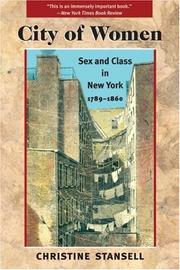 City of Women: Sex and Class in New York, 1789-1860 Shares history, nonfiction, women’s history
 -
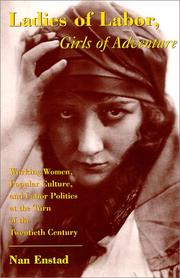 Ladies of Labor, Girls of Adventure: Working Women, Popular Culture, and Labor Politics at the Turn of the Twentieth Century Shares history, nonfiction, women’s history
 -
 Good Wives: Image and Reality in the Lives of Women in Northern New England, 1650-1750 Shares history, nonfiction, women’s history
 -
 Homeward Bound: American Families In The Cold War Era Shares history, nonfiction, American history
“People who read Cheap Amusements: Working Women and Leisure in Turn-of-the-Century New York tend to reach for these next.”
-
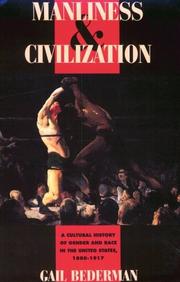 Manliness and Civilization: A Cultural History of Gender and Race in the United States, 1880-1917
-
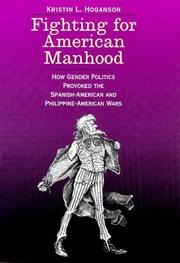 Fighting for American Manhood: How Gender Politics Provoked the Spanish-American and Philippine-American Wars
-
 Gender and Jim Crow: Women and the Politics of White Supremacy in North Carolina, 1896-1920
-
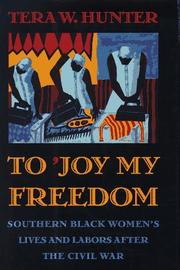 To 'Joy My Freedom: Southern Black Women's Lives and Labors After the Civil War