Seven Experiments That Could Change the World: A Do-it-yourself Guide to Revolutionary Science
Sign in to keep track of books you’ve read and want to read.
Examines the realities of unexplained natural phenomenon and provides explanations that push the boundaries of science.
* Looks at animal telepathy and the ability of pigeons to home.
Read more
* Proves the point that "big questions don't need big science".
* Noted scientist Rupert Sheldrake is a former research fellow of the Royal Society.
* New Edition with an Update on Results.
How does your pet "know" when you are coming home? How do pigeons "home"? Can people really feel a "phantom" amputated arm? These questions and more form the basis of Sheldrake's look at the world of contemporary science as he puts some of the most cherished assumptions of established science to the test. What Sheldrake discovers is that certain scientific beliefs are so widely taken for granted that they are no longer regarded as theories but are seen as scientific common sense. In the true spirit of science, Sheldrake examines seven of these beliefs. Refusing to let intellectual dogmatism influence his search for the truth, Sheldrake presents simple experiments that allow the curious and the skeptical to join in his journey of discovery. His experiments look at how scientific research is often biased against unexpected patterns that emerge and how a researcher's expectations can influence the results. He also examines the taboo of taking pets seriously and explores the question of human extrasensory perception. Perhaps most important, he questions the notion that science must be expensive in order to achieve important results, showing that inexpensive methods can indeed shake the very foundations of science as we know it.
In this compelling and intelligent book, Sheldrake offers no preconceived wisdom or easy answers—just an open invitation to explore the unknown, create new science, and perhaps, even change the world.
Liked Seven Experiments That Could Change the World: A Do-it-yourself Guide to Revolutionary Science? Here’s where I’d start.
These suit anyone who liked Seven Experiments That Could Change the World: A Do-it-yourself Guide to Revolutionary Science. Sign in and mark a few books for picks shaped around your own taste.
-
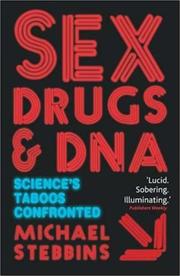 Sex, Drugs and DNA: Science's Taboos Confronted Shares science, nonfiction, philosophy
 -
 30-Second Theories: The 50 Most Thought-provoking Theories in Science, Each Explained in Half a Minute Shares science, nonfiction, philosophy
 -
The Meaning(s) of Life: A Human's Guide to the Biology of Souls Shares science, nonfiction, philosophy
-
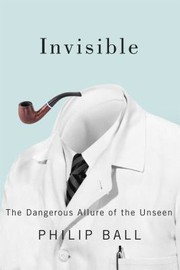 Invisible: The Dangerous Allure of the Unseen Shares science, nonfiction, philosophy