How to Kill a Dragon: Aspects of Indo-European Poetics
Sign in to keep track of books you’ve read and want to read.
In How to Kill a DragonCalvert Watkins follows the continuum of poetic formulae in Indo-European languages, from Old Hittite to medieval Irish. He uses the comparative method to reconstruct traditional poetic formulae of considerable complexity that stretch as far back as the original common language. Thus, Watkins reveals the antiquity and tenacity of the Indo-European poetic tradition.
Read more
Watkins begins this study with an introduction to the field of comparative Indo-European poetics; he explores the Saussurian notions of synchrony and diachrony, and locates the various Indo-European traditions and ideologies of the spoken word. Further, his overview presents case studies on the forms of verbal art, with selected texts drawn from Indic, Iranian, Greek, Latin, Hittite, Armenian, Celtic, and Germanic languages.
In the remainder of the book, Watkins examines in detail the structure of the dragon/serpent-slaying myths, which recur in various guises throughout the Indo-European poetic tradition. He finds the "signature" formula for the myth—the divine hero who slays the serpent or overcomes adversaries—occurs in the same linguistic form in a wide range of sources and over millennia, including Old and Middle Iranian holy books, Greek epic, Celtic and Germanic sagas, down to Armenian oral folk epic of the last century. Watkins argues that this formula is the vehicle for the central theme of a proto-text, and a central part of the symbolic culture of speakers of the Proto-Indo-European language: the relation of humans to their universe, the values and expectations of their society. Therefore, he further argues, poetry was a social necessity for Indo- European society, where the poet could confer on patrons what they and their culture valued above all else: "imperishable fame."
Liked How to Kill a Dragon: Aspects of Indo-European Poetics? Here’s where I’d start.
These suit anyone who liked How to Kill a Dragon: Aspects of Indo-European Poetics. Sign in and mark a few books for picks shaped around your own taste.
-
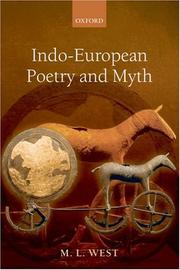 Indo-European Poetry and Myth Shares indo european, linguistics, poetry
 -
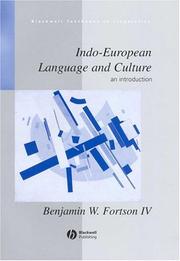 Indo-European Language and Culture: An Introduction Shares linguistics, indo european, nonfiction
 -
 The Oxford Introduction to Proto-Indo-European and the Proto-Indo-European World Shares indo european, linguistics, languages
 -
 In Search of the Indo-Europeans Shares linguistics, indo european, nonfiction