The Last Sorcerers: The Path from Alchemy to the Periodic Table
Sign in to keep track of books you’ve read and want to read.
They started with four: earth, air, fire, and water. From these basics, they sought to understand the essential ingredients of the world. Those who could see further, those who understood that the four were just the beginning, were the last sorcerers a " and the worlda (TM)s first chemists. What we now call chemistry began in the fiery cauldrons of mystics and sorcerers seeking not to make a better world through science, but rather to make themselves richer through magic formulas and con games. But among these early magicians, frauds, and con artists were a few far-seeing a oealchemistsa who, through rigorous experimentation, transformed mysticism into science.
Read more
By the 18th century the building blocks of nature, the elements of which all matter is composed, were on the verge of being discovery. Initially, it was not easy to determine whether a substance really was an element. Was water just water, plain and simple? Or could it be the sum of other (unknown and maybe unknowable) parts? And if water was made up of other substances, how could it be broken down into discreet, fundamental, and measurable components?
Scientific historians generally credit the great 18th century French chemist Antoine Lavoisier with addressing these fundamental questions and ultimately modernizing the field of chemistry. Through his meticulous and precise work this chaotic new field of scientific inquiry was given order. Exacting by nature, Lavoisier painstakingly set about performing experiments that would provide lasting and verifiable proofs of various chemical theories. Unfortunately, the outspoken Lavoisier eventually lost his head in the Terror, but others would follow his lead, carefully examining, measuring, and recording their findings.
As the field slowly progressed, another pioneer was to emerged almost 100 years later. Dimitri Mendeleev, an eccentric genius who cut his flowing hair and beard but once a year, sought to answer the most pressing questions that remained to chemists: Why did some elements have properties that resembled those of others? Were there certain natural groups of elements? And, if so, how many, and what elements fit into them? It was Mendeleev who finally addressed all these issues when he constructed the first Periodic Table in the late 1800s.
But between and after Lavoisier and Mendeleev were a host of other colorful, brilliant scientists who made their mark on the field of chemistry. Depicting the lively careers of these scientists and their contributions while carefully deconstructing the history and the science, author Richard Morris skillfully brings it all to life. Hailed by Kirkus Reviews as a a oeclear and lively writer with a penchant for down-to-earth examplesa Morrisa (TM)s gift for explanation a " and pure entertainment a " is abundantly obvious. Taking a cue from the great chemists themselves, Morris has brewed up a potent combination of the alluringly obscure and the historically momentous, spiked with just the right dose of quirky and ribald detail to deliver a magical brew of history, science, and personalities.
Liked The Last Sorcerers: The Path from Alchemy to the Periodic Table? Here’s where I’d start.
These suit anyone who liked The Last Sorcerers: The Path from Alchemy to the Periodic Table. Sign in and mark a few books for picks shaped around your own taste.
-
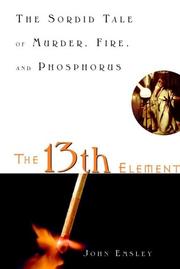 The 13th Element: The Sordid Tale of Murder, Fire, and Phosphorus Shares science, nonfiction, chemistry
 -
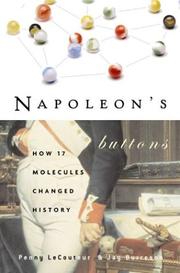 Napoleon's Buttons: How 17 Molecules Changed History Shares science, nonfiction, chemistry
 -
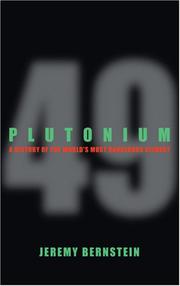 Plutonium: A History of the World's Most Dangerous Element Shares science, chemistry, nonfiction
 -
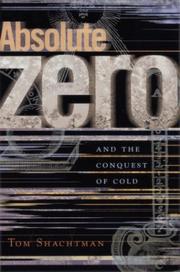 Absolute Zero and the Conquest of Cold Shares science, nonfiction, history