What Lincoln Believed: The Values and Convictions of America's Greatest President
Sign in to keep track of books you’ve read and want to read.
Few biographers and historians have taken Lincoln's ideas seriously or placed him in the context of major intellectual traditions. In What Lincoln Believed, the most comprehensive study ever written of the thought of America's most revered president, Michael Lind provides a resource to the public philosophy that guided Lincoln as a statesman and shaped the United States.
Read more
Although he is often presented as an idealist dedicated to political abstractions, Lincoln was a pragmatic politician with a lifelong interest in science, technology, and economics. Throughout his career he was a disciple of the Kentucky senator Henry Clay, whose "American System" of government support for industrial capitalism Lincoln promoted when he served in the Illinois statehouse, the U.S. Congress, and the White House.
Today Lincoln is remembered for his opposition to slavery and his leadership in guiding the Union to victory in the Civil War. But Lincoln's thinking about these subjects is widely misunderstood. His deep opposition to slavery was rooted in his allegiance to the ideals of the American Revolution. Only late in his life, however, did Lincoln abandon his support for the policy of "colonizing" black Americans abroad, which he derived from Henry Clay and Thomas Jefferson. Lincoln and most of his fellow Republicans opposed the extension of slavery outside of the South because they wanted an all-white West, not a racially integrated society.
Although the Great Emancipator was not the Great Integrationist, he was the Great Democrat. In an age in which many argued that only whites were capable of republican government, Lincoln insisted on the universality of human rights and the potential for democracy everywhere. In a century in which liberal and democratic revolutions against monarchy and dictatorship in Europe and Latin America repeatedly had failed, Lincoln believed that liberal democracy as a form of government was on trial in the American Civil War. "Our popular government has often been called an experiment," Lincoln told the U.S. Congress, insisting that the American people had to prove to the world that "when ballots have fairly, and constitutionally, decided, there can be no successful appeal, back to bullets." If the United States fell apart after the losers in an election took up arms, then people everywhere might conclude that democracy inevitably led to anarchy and "government of the people, by the people, for the people" might well "perish from the earth."
"He loved his country partly because it was his own country, but mostly because it was a free country." What Lincoln said of Henry Clay could be said of him as well. In What Lincoln Believed, Michael Lind shows the enduring relevance of Lincoln's vision of the United States as a model of liberty and democracy for the world.
Liked What Lincoln Believed: The Values and Convictions of America's Greatest President? Here’s where I’d start.
These suit anyone who liked What Lincoln Believed: The Values and Convictions of America's Greatest President. Sign in and mark a few books for picks shaped around your own taste.
-
 Harry and Arthur: Truman, Vandenberg, and the Partnership That Created the Free World Shares history, presidents, biography
-
 The Avenger Takes His Place: Andrew Johnson and the 45 Days That Changed the Nation Shares presidents, history, biography
-
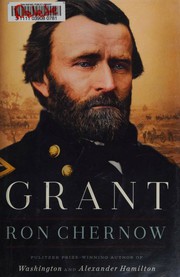 Grant Shares history, biography, civil war
-
Worst. President. Ever.: James Buchanan, the POTUS Rating Game, and the Legacy of the Least of the Lesser Presidents Shares history, biography, presidents